Technology

The tools are free. Knowing about them is the hard part.

A student with a borrowed laptop and an internet connection can now do work that used to need a budget, a developer and a designer. Almost none of them know that. We go and show them.

Where this comes from

What building an AI company taught us.

Shawn Reddy founded Team Nebula, which builds AI systems for enterprises and government agencies. The job puts him in front of the same situation on repeat: a small team, a hard problem, and nothing like the budget the problem seems to demand.

They close it anyway. The distance that used to be crossed by hiring people or buying software gets crossed by one person, a free account and an afternoon. He watched that happen enough times to stop treating it as a trick of the trade.

The same thing is available to a fifteen-year-old in Kathmandu. She needs a device, a connection and someone to tell her it exists.
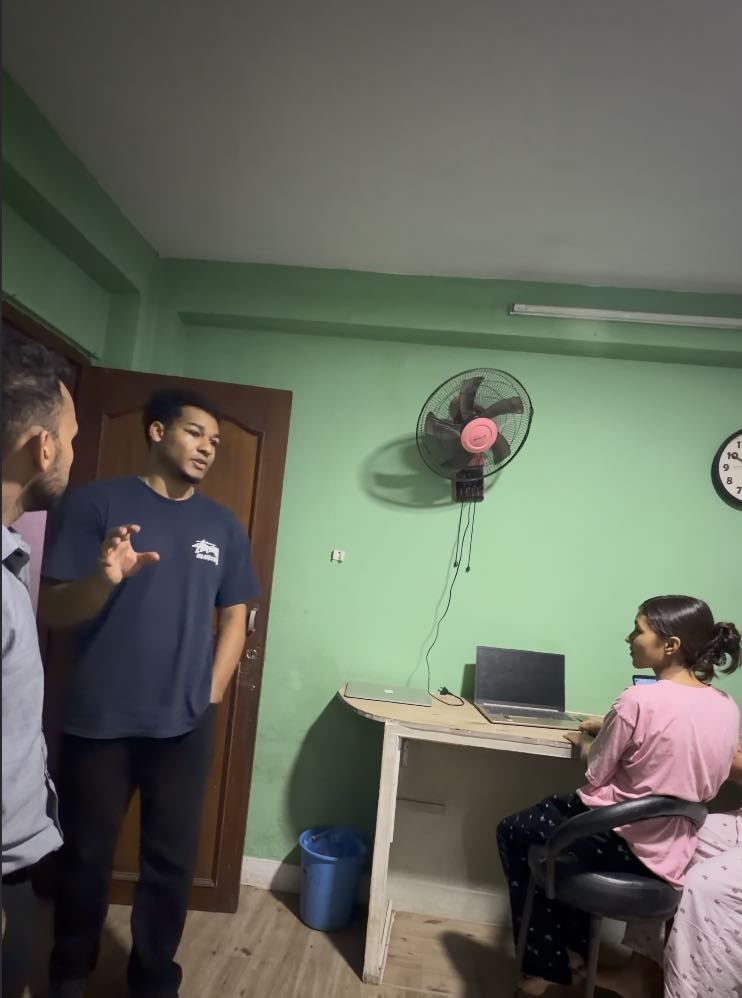
Shawn Reddy talking with his hand raised mid-explanation while a student works at a laptop on a wooden desk beside him.
The barrier

It stopped being about money.

The best of these tools cost nothing to start. A device and a connection is the whole entry fee, and at the Asha school that part is already handled.

Nobody told them

Most students have never heard of the tools that would help them most. The gap is information, and it stays open because no one in their world has closed it.

Nobody showed them

Knowing a tool exists and knowing what to ask it are different skills. Without the second one, a student opens the page once and never returns.

So we sit down with them

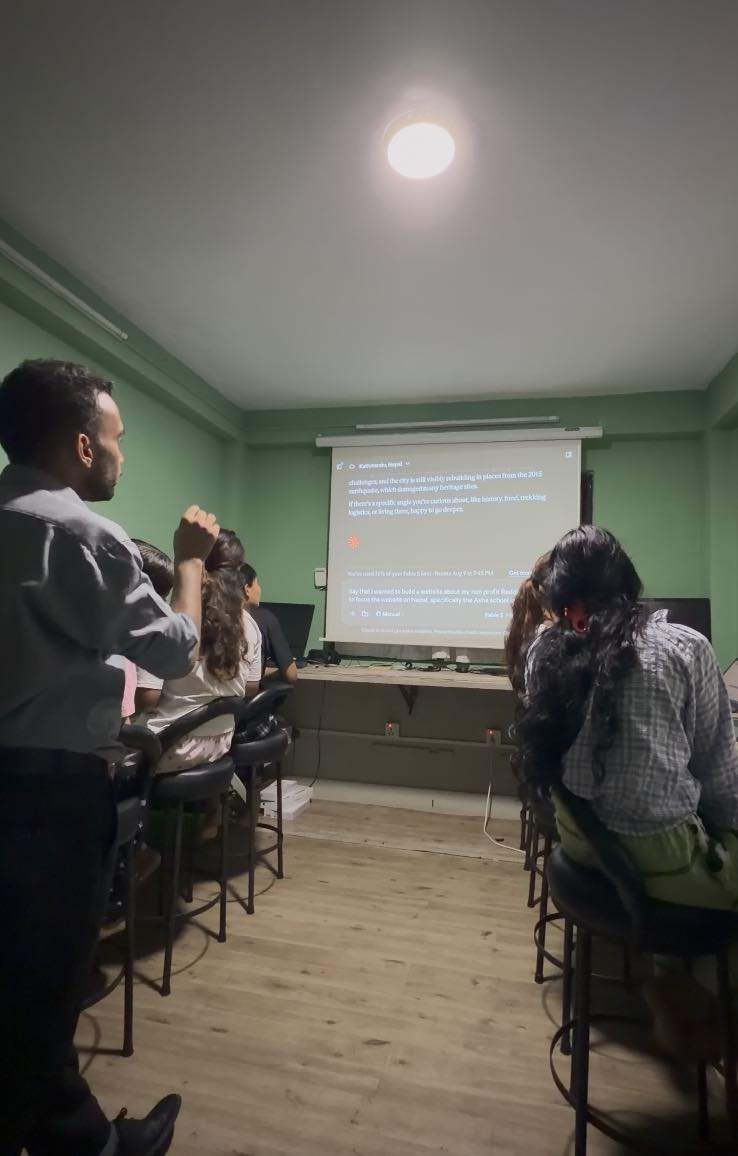
We bring the laptops out, put the screen on the wall, and work through real questions the students choose. They drive. We answer.

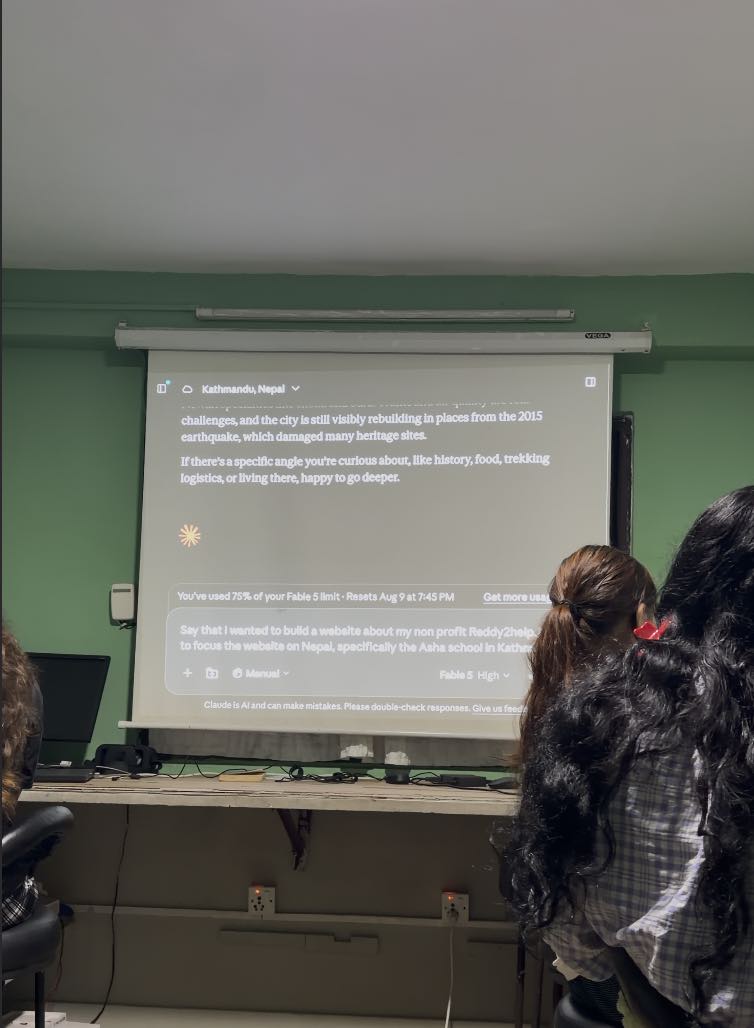
An AI assistant conversation projected on a pull-down screen in the school computer room, showing a question about building a website for the Asha school in Kathmandu.
What a session looks like

We build something they asked for.

The screen in this photograph is a live session. The question on it came from the room: how would you build a website for a nonprofit working in Nepal, focused on this school.

Students watch it get answered, then take the keyboard and change the question. That is the entire lesson. Not a lecture on artificial intelligence, but forty minutes of watching a thing they assumed was locked behind money and a degree answer them directly.

They leave knowing the tool’s name and knowing they are allowed to use it.

Who we prioritise

Girls and young women first.

In the communities we work in, girls are the ones most likely to be pulled out of school early, handed the household work, and told the technical path belongs to someone else. They also tend to be the ones already carrying responsibility for a family.

Put a capable tool in those hands and it goes further than it would anywhere else. So when there are six seats in a room, we make sure who fills them is a decision and not an accident.

Students seated on stools in the school computer room, watching a projected screen while a facilitator stands at the side of the room.
Our technology partner

Why Team Nebula sits behind this.

Team Nebula builds AI systems for enterprises and government agencies. It is also the reason a nonprofit this small can run at all.

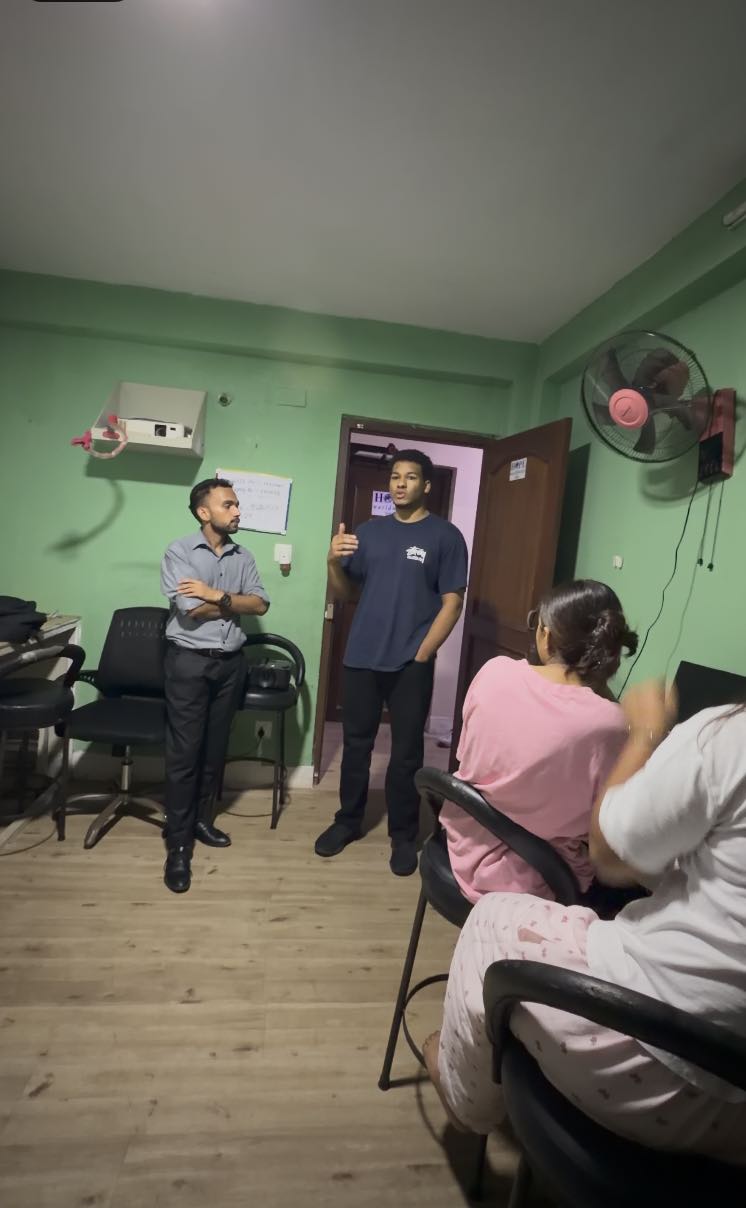
Diwas Rathod and Shawn Reddy standing at the front of the school computer room, talking with two students seated in office chairs.

It pays for the plumbing

The hosting, the domain and the email behind this site are donated in kind by Team Nebula, so the money that arrives for the school goes to the school.

How we work

It supplies the expertise

The people teaching these sessions do this work for a living. Students get the current answer rather than a curriculum written three years ago.

It keeps us small

Running lean is what lets a foundation of this size back a school at all. The technology is most of how we stay that way.

Partner with us
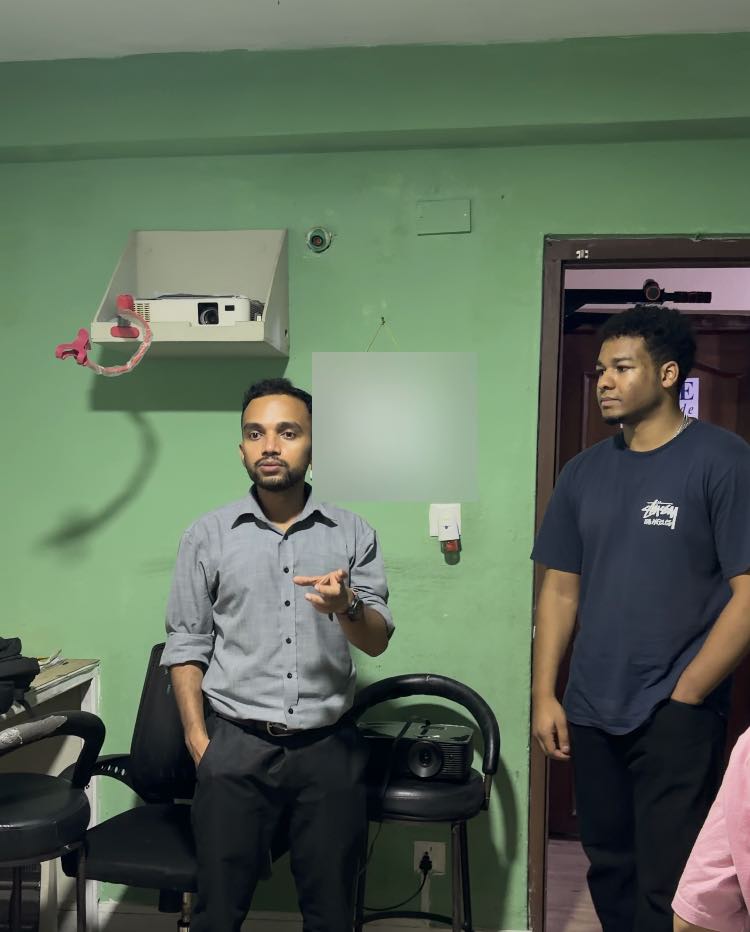
Diwas Rathod speaking to the room at the Asha school, Shawn Reddy standing beside him in a doorway.
The honest part

We know what AI is accused of.

Plenty of people think this technology is bad for workers, bad for the truth and bad for the planet. Those arguments are not made up. The energy the industry burns is real, and so is the damage from the ugliest uses of it.

Our answer is not that the criticism is wrong. It is that the same capability, handed to a student in Kathmandu who has been shut out of every expensive door, does something the criticism does not account for.

Whether this technology is worth what it costs depends on who ends up holding it. We would rather that group included these students.

Help us put it in their hands.

Every session runs on donated time and donated infrastructure. More of both means more students in the room.

Get involved