 Reddy2Help
Students need a way to show what they can do
AI education becomes more useful when students leave with a small, understandable portfolio that shows their judgment as well as their technical skills.
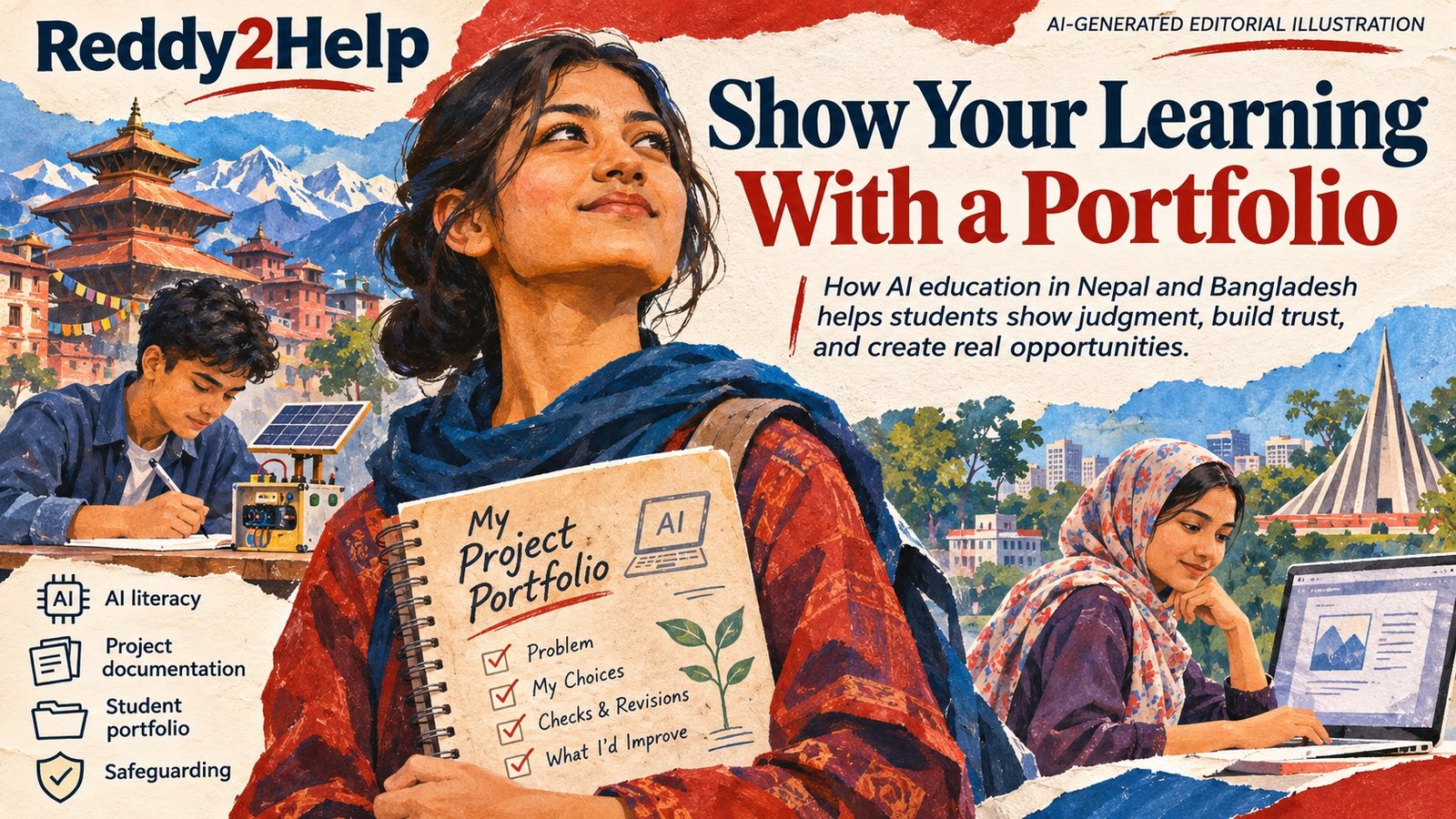
A finished task is not yet a way forward
At the Asha school, an AI exercise can end when the answer appears on the screen. That is a useful moment, but it is not the same as having something another person can understand and trust. A student may have learned to ask better questions, check an output, and repair a broken workflow, yet still have no clear way to show that learning.
A small student portfolio changes the task. It gives students a place to keep a project, explain the problem it addressed, and describe the choices they made. The result does not need to look like professional software. It needs to make the student’s thinking visible.
Show the work, not just the result
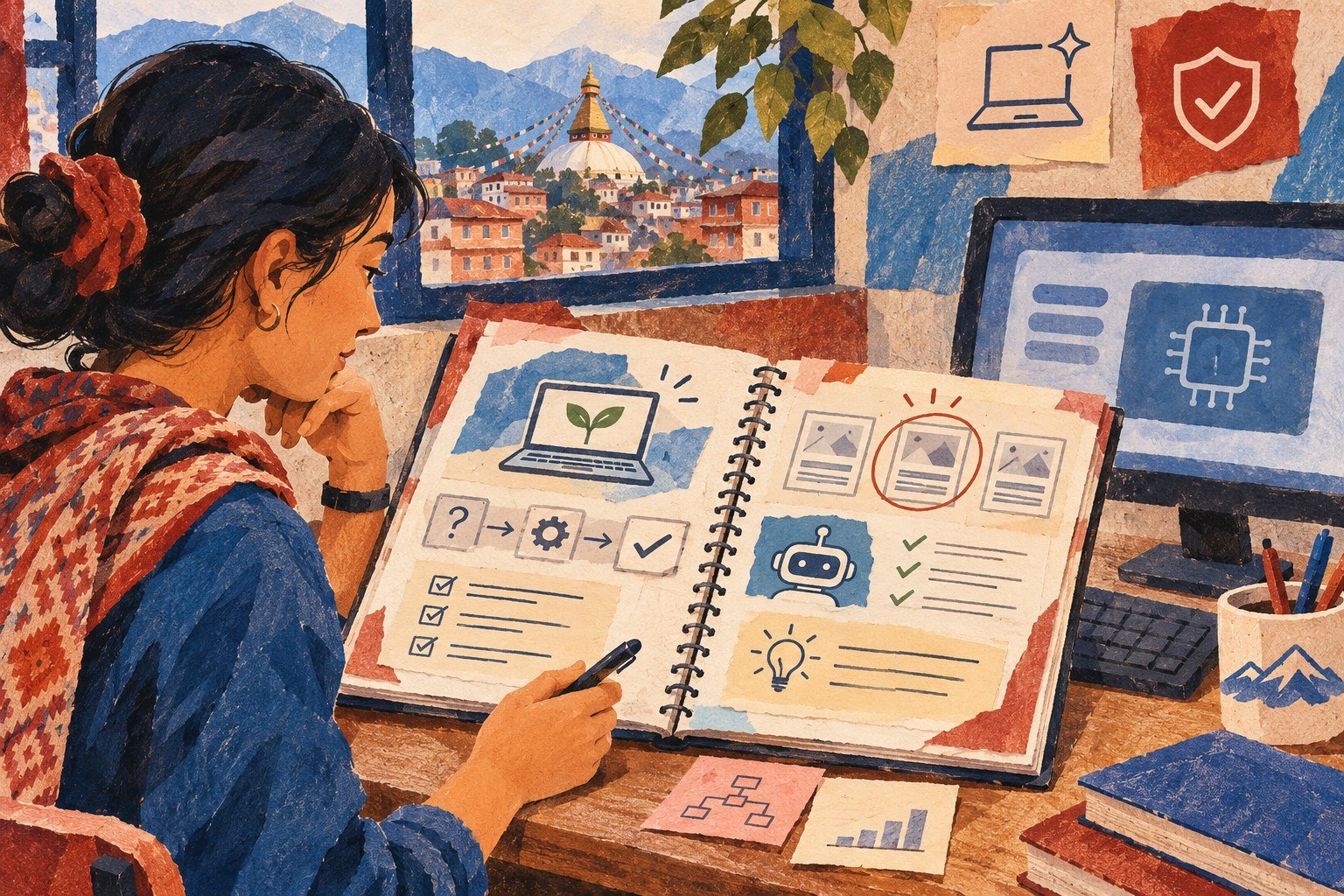
A polished answer can hide a weak process. Project documentation can include the first question, an early mistake, the check that found the mistake, and the revision that followed. This makes AI literacy easier to see than a final paragraph or image presented without context.
Students can make a simple record for each project:
- What problem were we trying to address?
- Which parts came from a tool, and which parts did we change?
- How did we check the result?
- What would we do differently next time?
These questions do not require expensive software. A folder of plain documents, a printed page, or a locally saved web page can hold the work. The point is not the platform. The point is a durable record that can be opened and explained.
A portfolio is practice for being understood
Many opportunities begin with an explanation. Someone may ask what a student can do, how they approached a task, or why they chose one solution over another. A portfolio gives students practice answering those questions with evidence rather than a general claim that they are interested in technology.
This is different from asking students to perform confidence. A student who can say, “The tool suggested this, I found that it did not fit the audience, and I changed it for this reason,” is demonstrating judgment. That explanation may matter more than a flawless generated result.
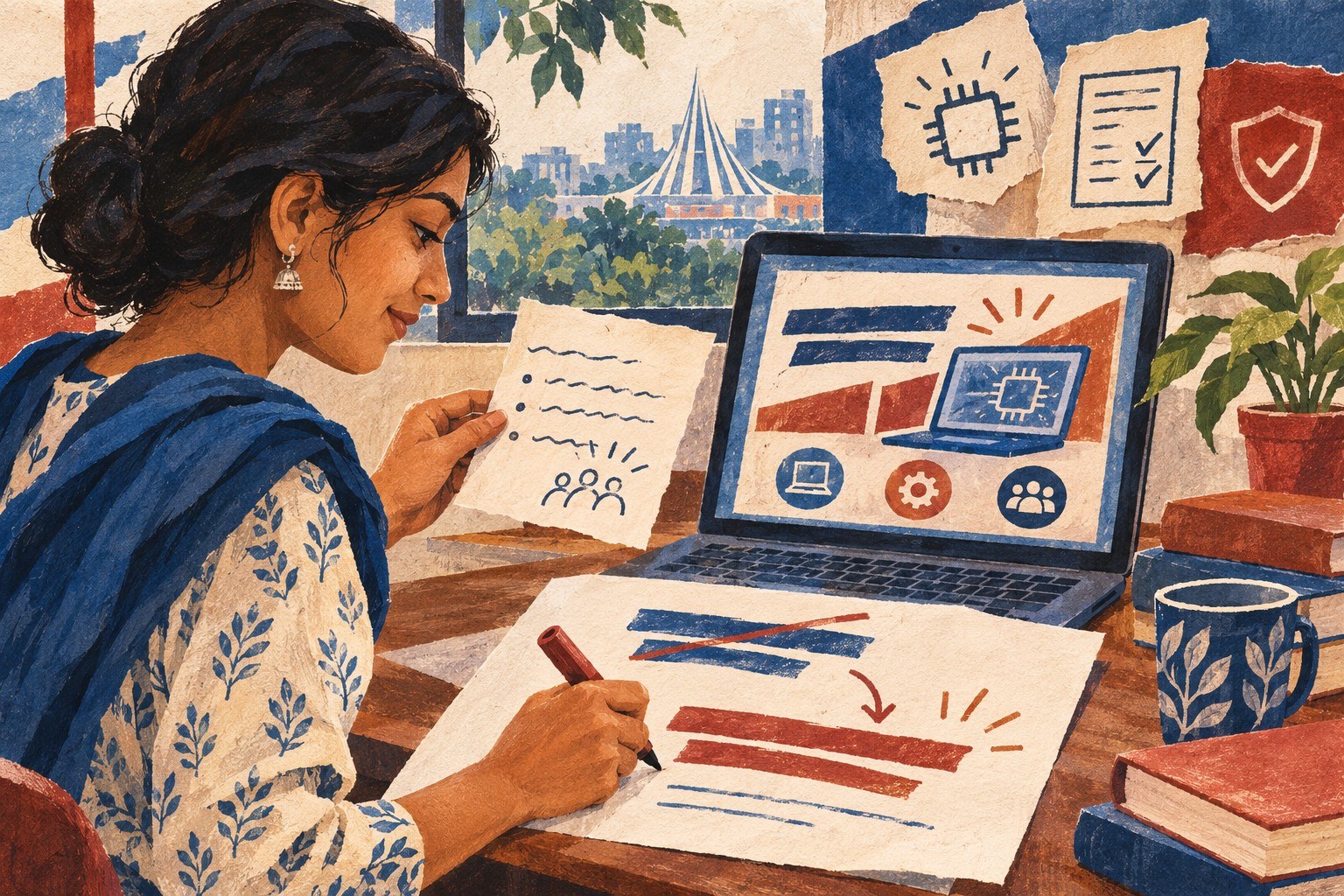
A teacher can review the explanation without treating it as a test of expensive equipment. The review can focus on whether the student understood the audience, checked important details, and made a deliberate choice. Those are useful skills in office work, community projects, and further study.
Keep the record honest and safe
A portfolio should not become a reason to publish private information. Students do not need to include their full name, address, family circumstances, or identifiable details about other people. The safeguarding rule remains simple: do not write about a named child or expose someone else’s personal life to make a project seem more real.
A safe portfolio can use a fictional brief, a general community problem, or a sample audience. It can show the process without claiming that an invented scene is documentary evidence. Students can also label AI-generated material clearly, so a reader knows what was produced by a tool and what was reviewed or rewritten by the student.
This gives teachers a practical checklist:
- Remove personal details before sharing.
- Mark generated material clearly.
- Keep the prompts and revisions that explain the process.
- Check that the final work does not make an unsupported claim.
Build something a stranger can read
The strongest portfolio item is not necessarily the most ambitious. It may be a clear guide, a repaired spreadsheet, a translated notice reviewed for meaning, or a small information page that solves one defined problem. The reader should understand what the item is for without needing to sit beside its creator.
At Reddy2Help, this is the larger reason to teach sustainable technology and AI education. Free tools can widen what a young person is able to try, but access alone does not create an opportunity. Students also need a way to carry their learning from one lesson, device, or application into the next conversation. That is why technology education should include work that students can explain and carry forward.
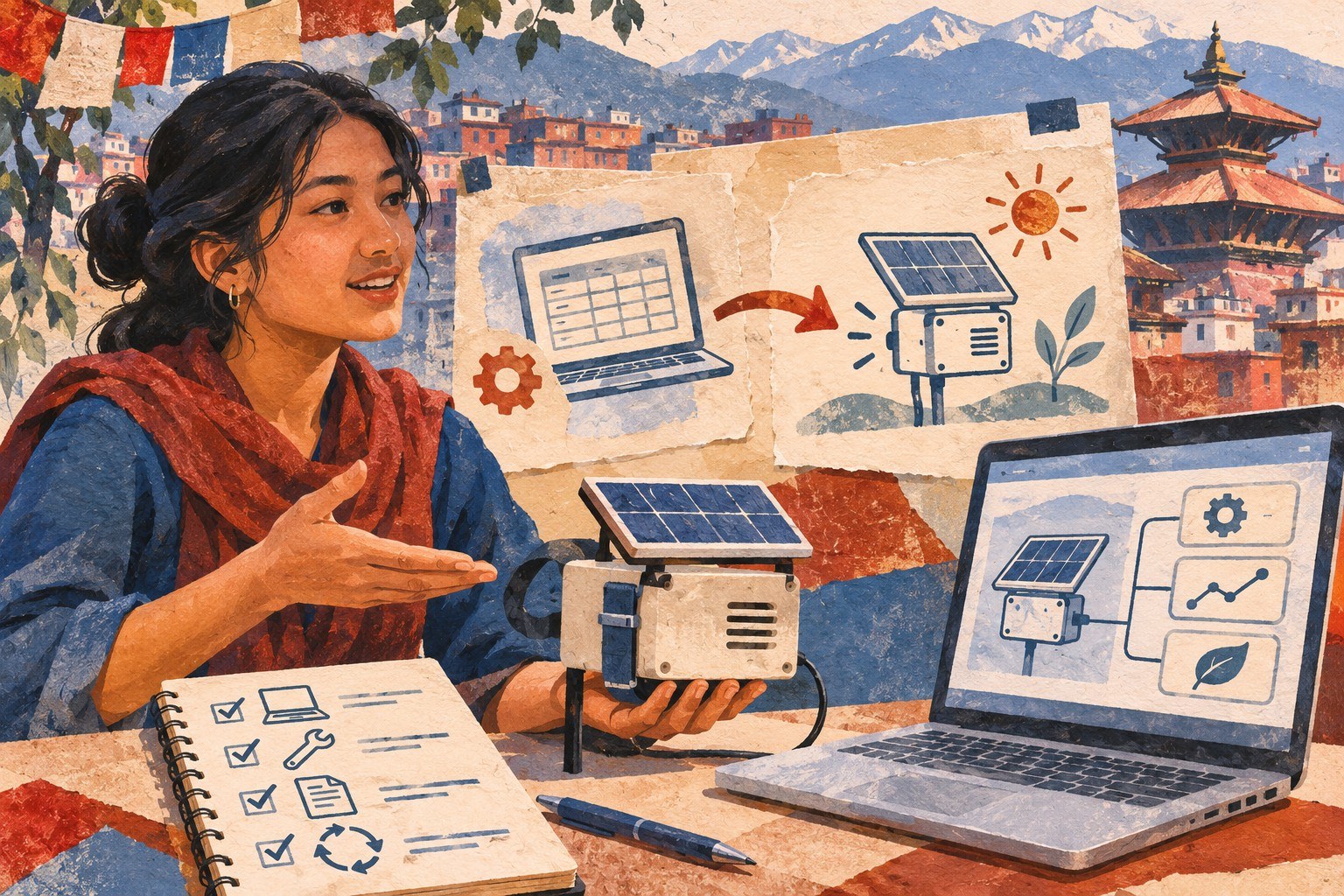
A useful portfolio is a bridge between practice and recognition. It does not promise employment, and it does not turn a school exercise into a credential. It gives a student something better grounded: a small body of work, an honest account of how it was made, and language for explaining what they learned.
How can students use AI education to show what they can do?
Students can create a small portfolio containing their project, the problem it addressed, the AI-generated material they reviewed, and the changes they made. A clear portfolio helps students demonstrate judgment, checking, and explanation without requiring expensive software or exposing private information.