 Reddy2Help
Students learn more when they can explain how their AI work was made
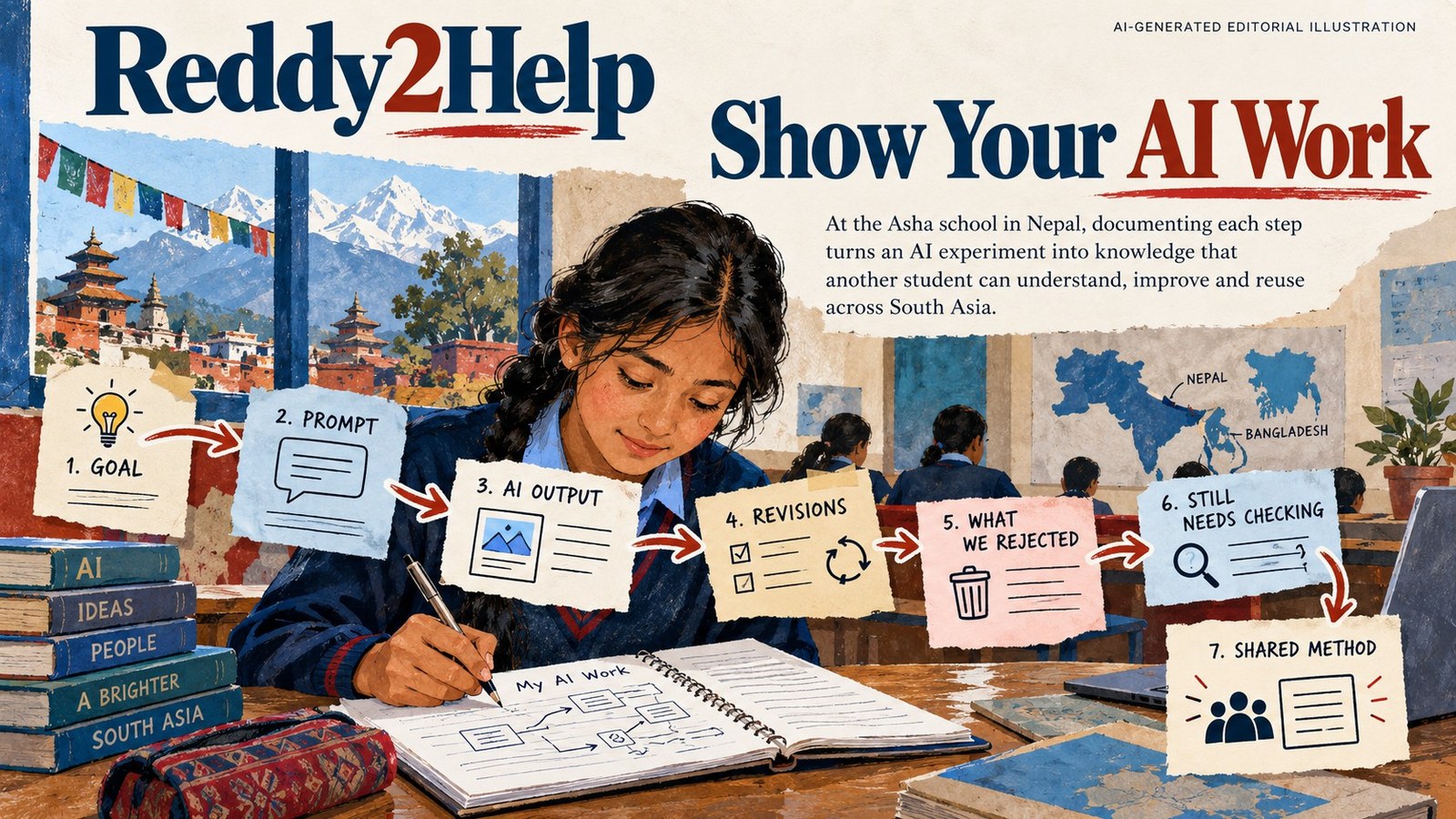
At the Asha school, documenting each step can turn an AI experiment into knowledge that another student can understand, improve and reuse.
The work after the first result
An AI tool can produce a useful answer before a student understands the work behind it. That creates a problem in any classroom. If the result disappears, or if another student needs to change it, the original user may not know which instruction mattered or how to begin again.
A simple record changes the task. A student can save the question they asked, the answer they received, the parts they rejected and the change they made next. This is not paperwork added after learning. It is part of student learning, because it makes an invisible process available for discussion.
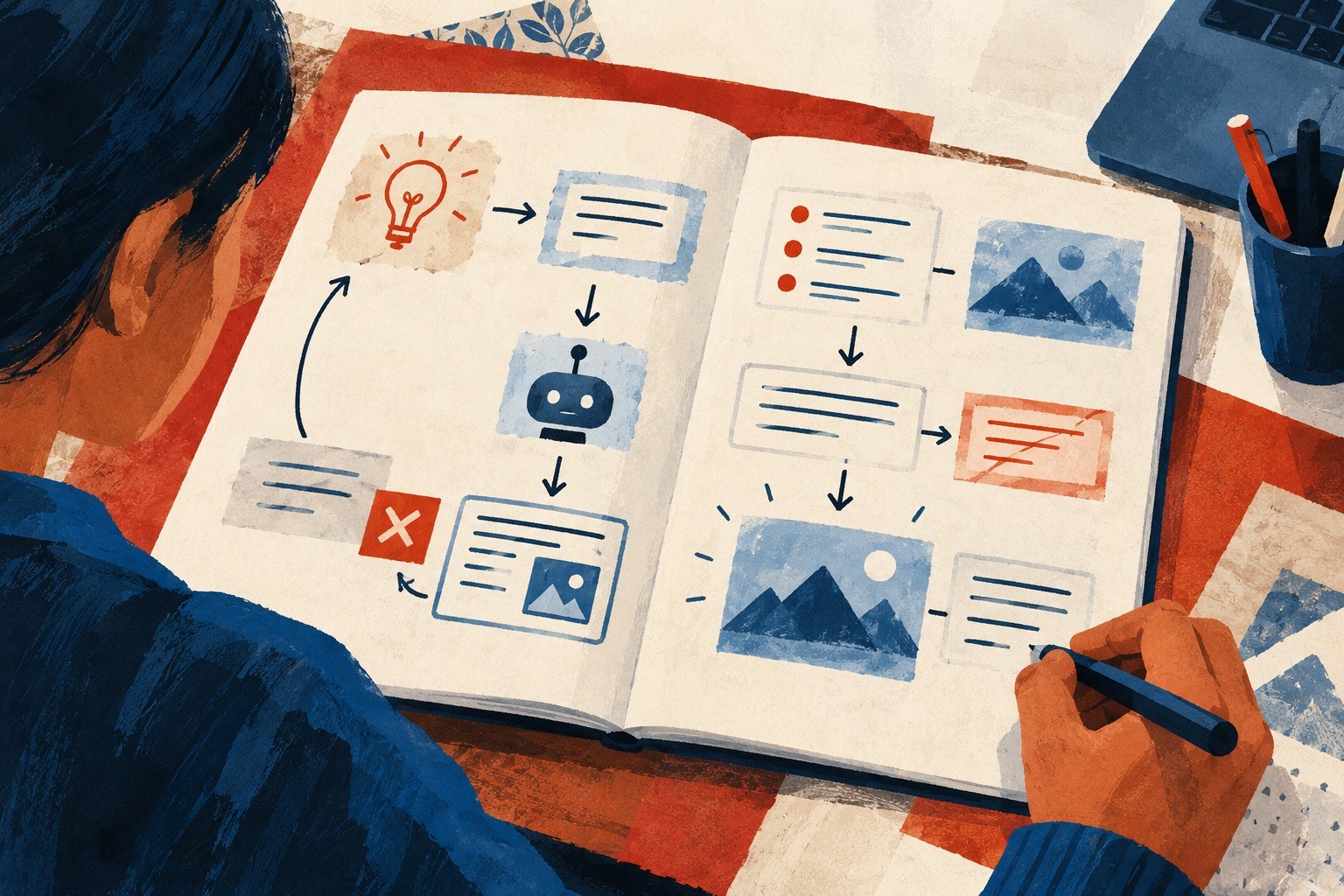
At the Asha school, the useful question is not only whether a tool made something impressive. It is whether a student can show the route from a rough idea to a result. That route may include a sketch, a short explanation, a revised instruction or a note about what remained wrong.
Documentation is a technical skill
People often describe AI literacy as knowing which button to press. A stronger definition includes being able to leave a trail that another person can follow. That trail does not need special software. It can be a page in a notebook, a shared document or a series of clearly named files.
A student documenting AI work might record:
- what they wanted the tool to help with
- what information they gave it
- what the tool returned
- what they changed and why
- what still needs checking
Each item makes a different kind of thinking visible. The first describes a goal. The second shows what the tool was allowed to use. The third creates something to inspect. The fourth shows judgment, and the fifth prevents a polished result from pretending to be finished.
From private experiment to shared knowledge
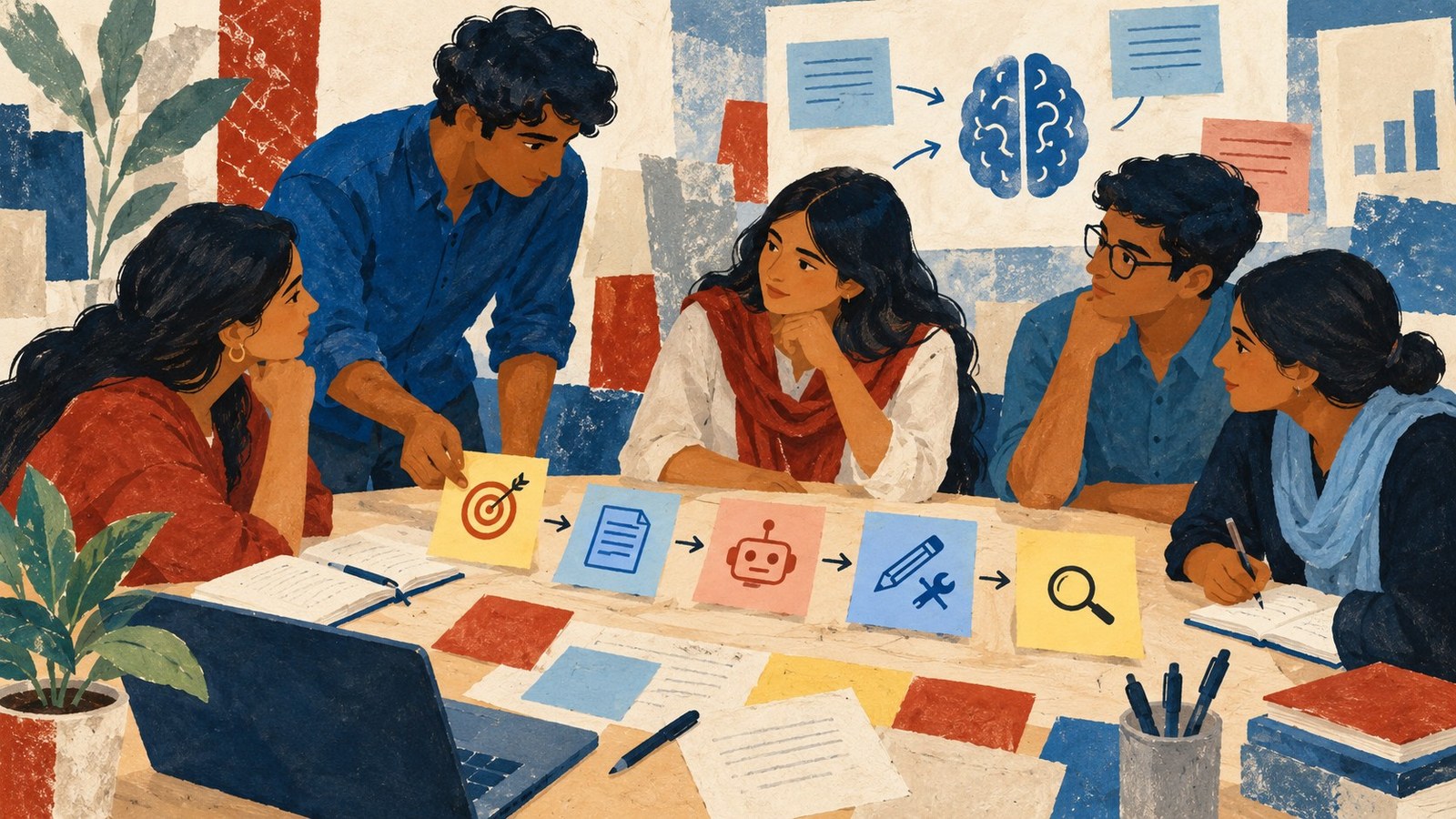
A record also changes who can participate. A student who missed part of a session can follow the steps. A classmate can suggest a better approach without guessing what happened. A teacher can see whether the difficulty came from the idea, the instructions, the available information or the tool itself.
That matters in communities where access to devices and reliable connectivity may be uneven. Learning should not vanish when a laptop is unavailable for a while. Clear documentation builds technology skills and allows the next session to begin with the work already done, rather than asking someone to remember every step.
The record can also protect a student from taking credit for a result they do not understand. If the process is visible, the student has a reason to explain the choices and a chance to find the weak point. The goal is not to expose mistakes. It is to make improvement possible.
What a reusable record looks like
The best documentation is short enough to use during a real project. It should name the purpose in ordinary language, keep the important instructions, and separate the tool’s suggestions from the student’s decisions. It should also state when an answer has not been verified.
A practical template might ask:
- What were we trying to make or understand?
- What did we already know?
- What did the AI tool suggest?
- What did we keep, change or discard?
- How could another student continue this work?
This approach makes AI education less about collecting outputs and more about building a shared method. It gives students something they can carry to a new tool, a new subject or a workplace where explaining a process matters as much as producing a result.
The skill that remains
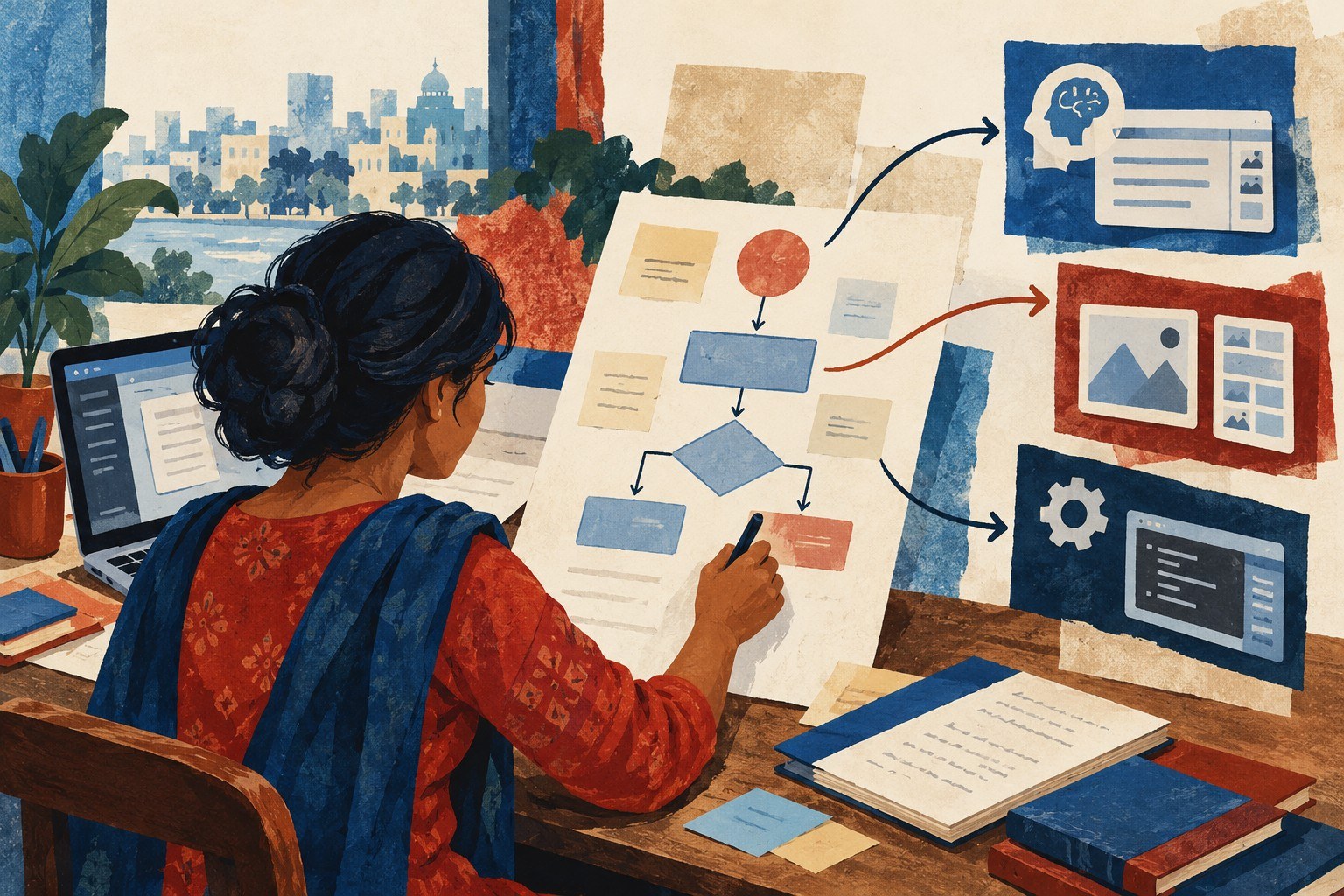
Reddy2Help teaches young people to use technology as a way to widen their choices, not as a shortcut that hides how work gets done. Documentation fits that purpose. It costs little to begin, works on paper when necessary and helps a student turn a one-time experiment into knowledge another person can use.
The strongest evidence of learning may therefore be beside the finished image, paragraph or plan. It is the student’s explanation of what changed, what failed and what they would try next. That explanation gives the work a future beyond the original app.
How can students learn to use AI skills that last beyond one tool?
Students can document their AI work by recording their goal, instructions, results, changes and unresolved questions. This helps them explain their decisions, improve their process and transfer the skill to another tool or setting.