 Reddy2Help
Open lessons let more teachers adapt AI education
When AI teaching materials can be reused and changed legally, educators with limited budgets can build lessons for their own languages, devices, and communities.
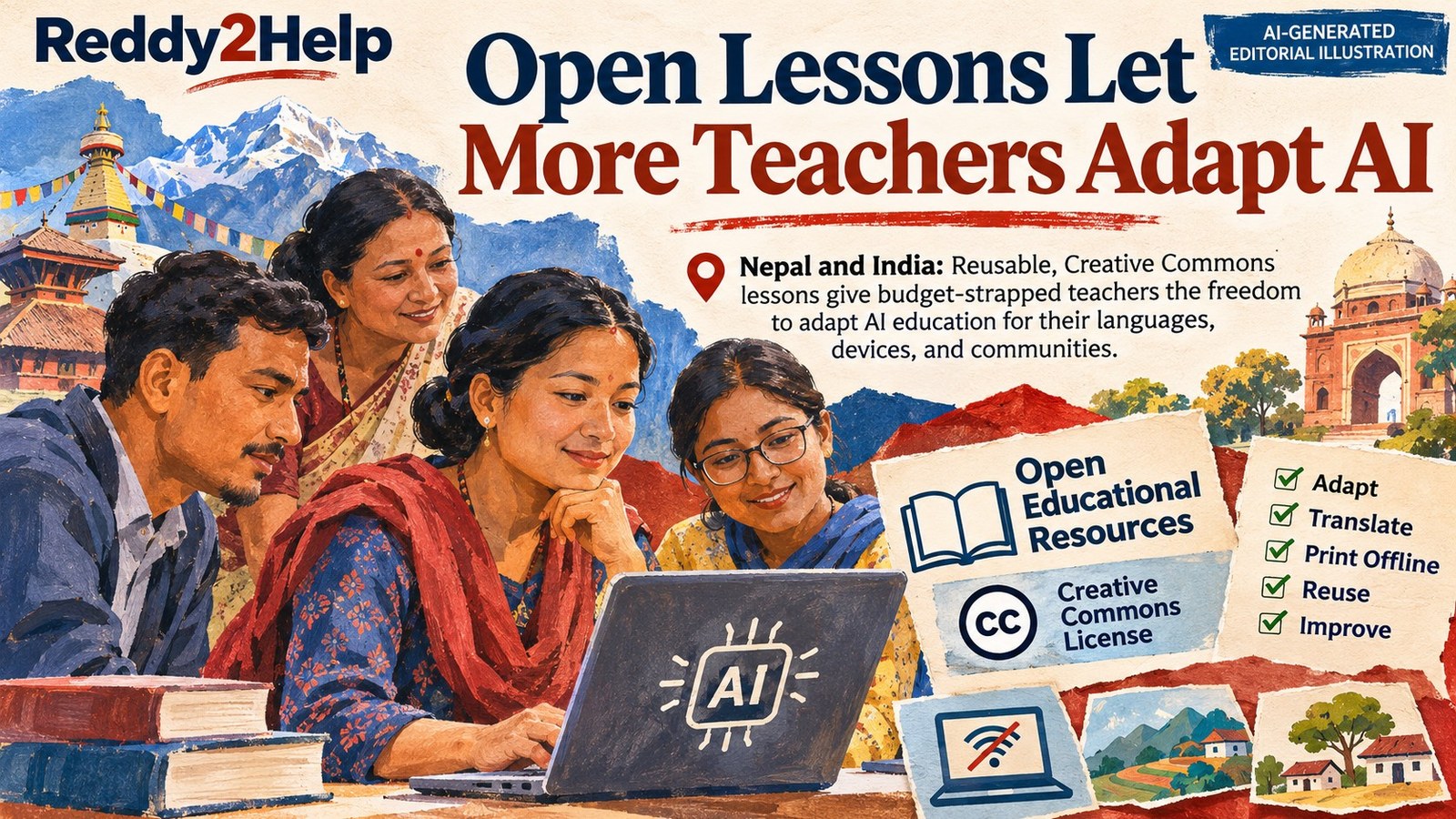
The hidden cost is adaptation
A free AI tool is only a starting point. A teacher still needs an activity, an explanation, examples that make sense locally, and a way to run the lesson on the devices available. If those materials are locked away, every school has to begin again.
Open educational resources change that equation. A lesson published with a clear Creative Commons license can be translated, shortened, combined with another activity, or printed for a class that cannot rely on a stable connection. The useful resource is not just the original file. It is the permission to improve it.
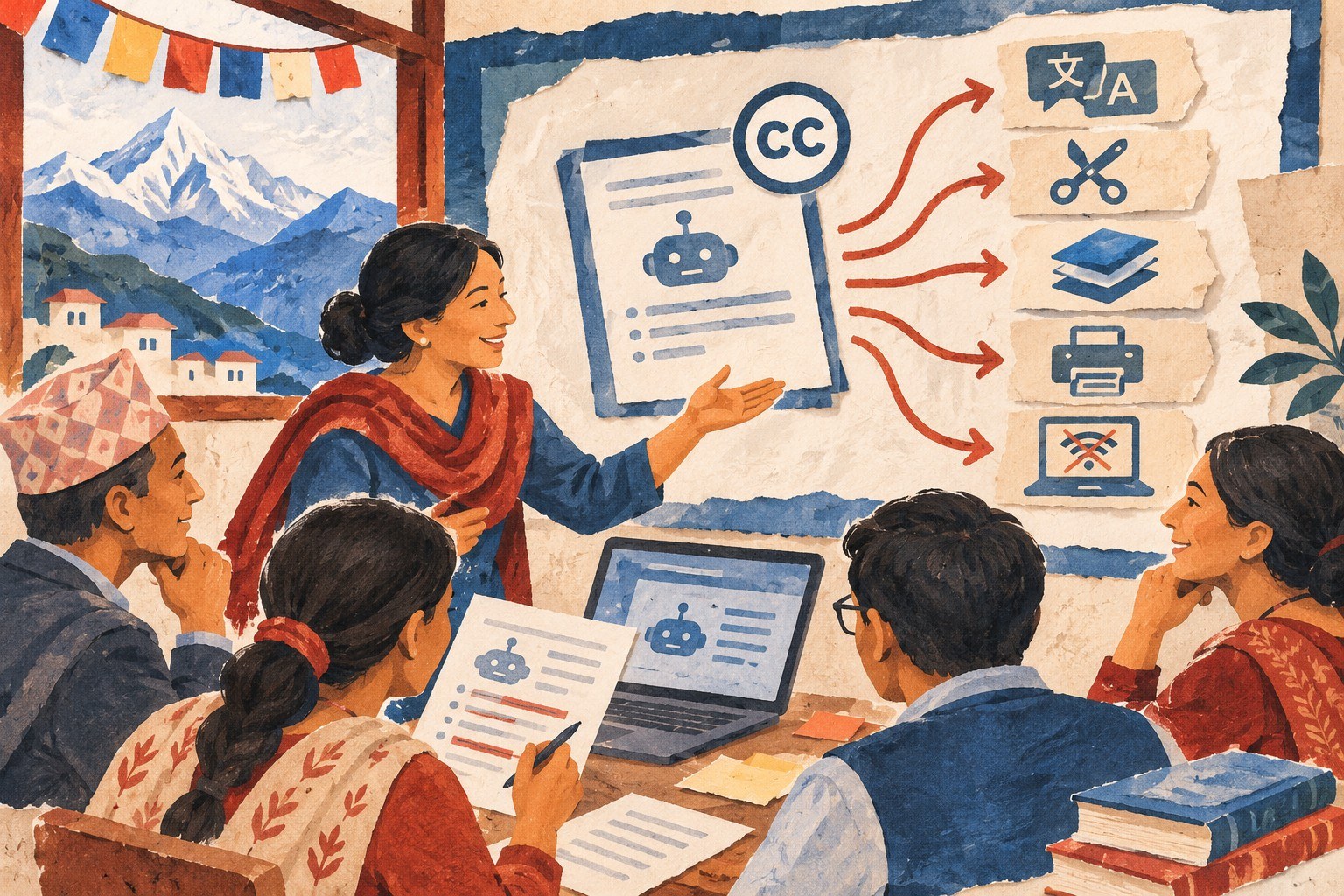
Permission is part of access
People often describe access as a question of hardware or connectivity. Those matter, but permission matters too. A teacher may find a useful explanation online and still be unable to copy it into a handout, change its examples, or share an adapted version with another class.
Clear licensing removes that uncertainty. It tells educators what they may do before they invest time in rewriting a resource. The best materials make the license easy to find and explain whether adaptation, translation, and redistribution are allowed.
This is especially important for AI education, where a lesson written for a well-connected English-speaking classroom may assume tools, vocabulary, and working habits that do not fit elsewhere. Reuse makes local knowledge part of the material rather than an afterthought.
What a reusable lesson contains
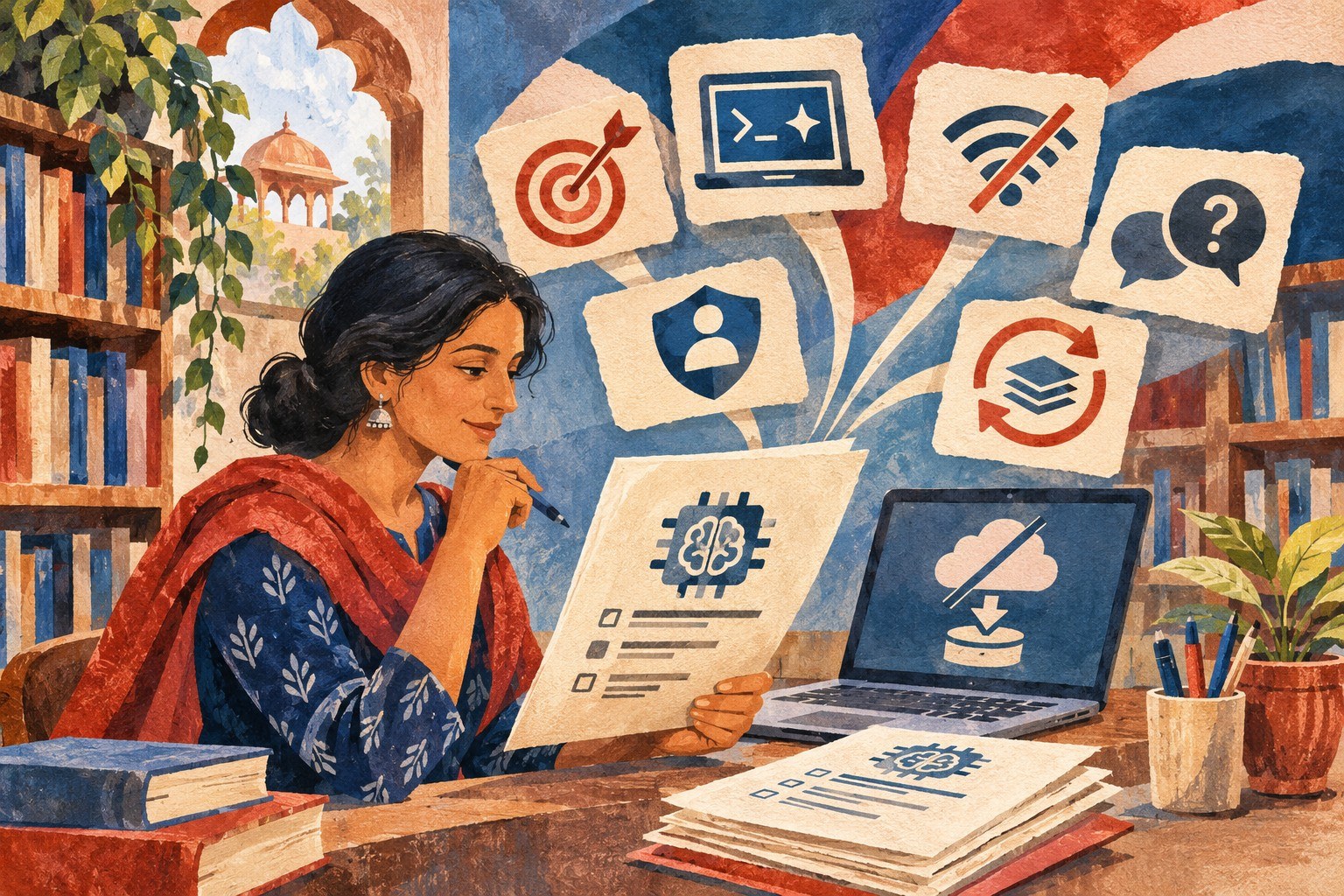
A useful open lesson should give a teacher more than a polished page. It should show the decisions behind the activity and leave room for a different setting.
- The learning goal in plain language
- The prompt or task students will try
- A version that works with limited connectivity
- Questions that help students check the result
- Notes about privacy, attribution, and safe use
Those details make lesson adaptation practical. They also help a teacher judge whether an activity teaches a real skill or merely produces an impressive-looking answer. A reusable lesson can be improved because its parts are visible.
Local examples make the lesson real
Translation is not enough when the examples still belong to somebody else’s life. A lesson about writing a service notice, comparing prices, or explaining a repair should use situations that learners recognize without requiring them to pretend they live somewhere different.
That does not mean every teacher must create everything alone. An educator can begin with an open activity, replace its examples, and publish the revision so another educator can learn from the change. Over time, the resource becomes a record of practical teaching choices.
Reddy2Help’s work with technology and AI education should follow that principle. The aim is not to make one perfect lesson. It is to help people with the least money and information gain materials they can understand, question, and make their own.
A better way to share progress
Open materials also make it easier to discuss what worked and what did not. A teacher can explain that a prompt was confusing, that an offline learning version was more useful, or that a privacy instruction needed stronger wording. That is more valuable than presenting a lesson as finished and universal.
The habit is simple: name the source, state the license, describe the changes, and invite the next improvement. Attribution respects the work that came before while making the chain of adaptation visible.
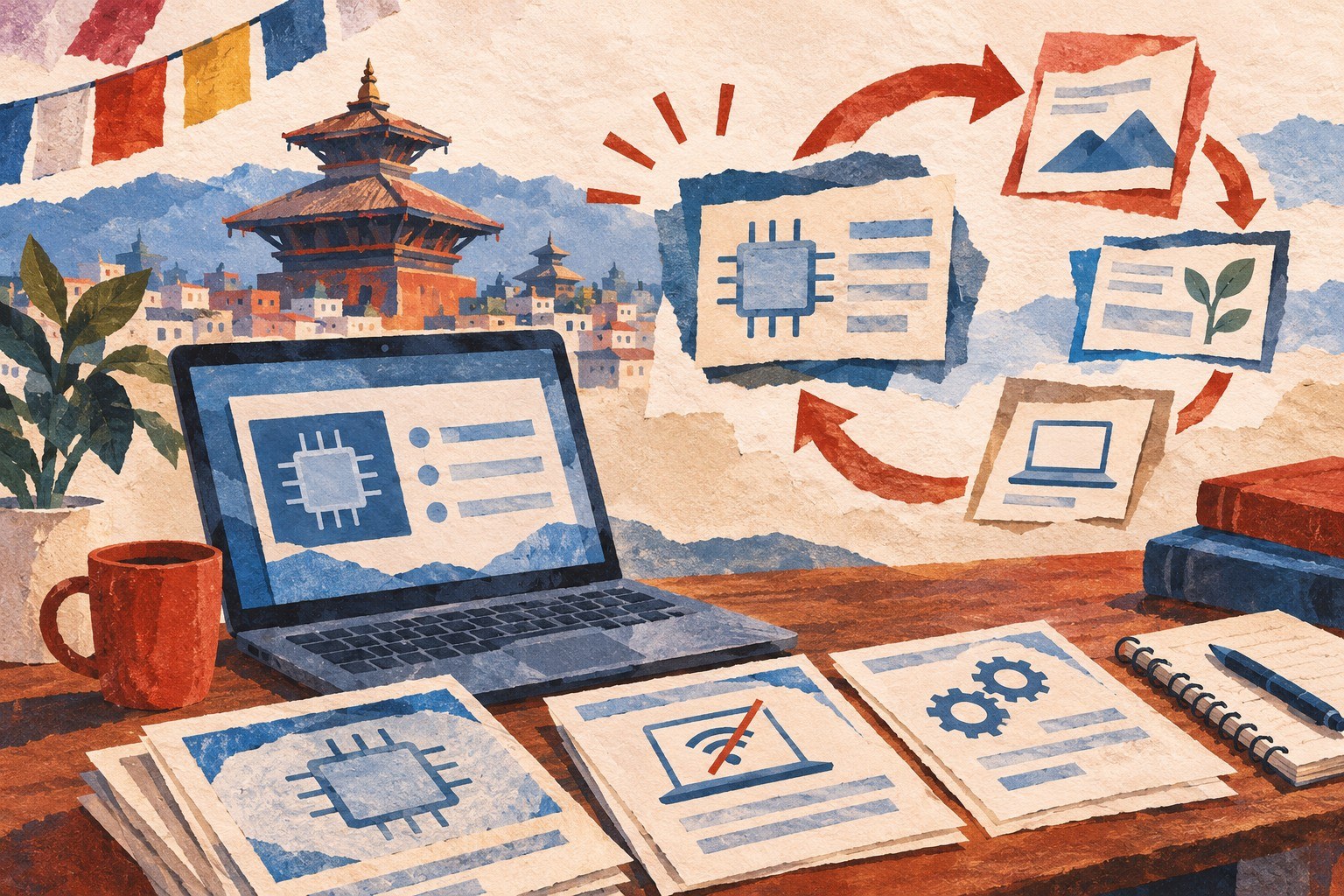
AI will not reduce educational inequality by itself. But lessons that can be copied, translated, tested, and repaired give teachers a cheaper way to bring useful practice to places where commercial training is out of reach. That is access built into the material, not added after it.
How can open educational resources make AI education more accessible?
Open educational resources let teachers legally adapt, translate, print, and share AI lessons for their own languages, devices, and communities. Reddy2Help can use this approach to help educators build practical technology lessons without requiring each school to start from scratch.