 Reddy2Help
AI access is incomplete when the useful language is missing
AI tools become more useful to underserved communities when people can ask questions, read results, and check mistakes in the languages they use every day.
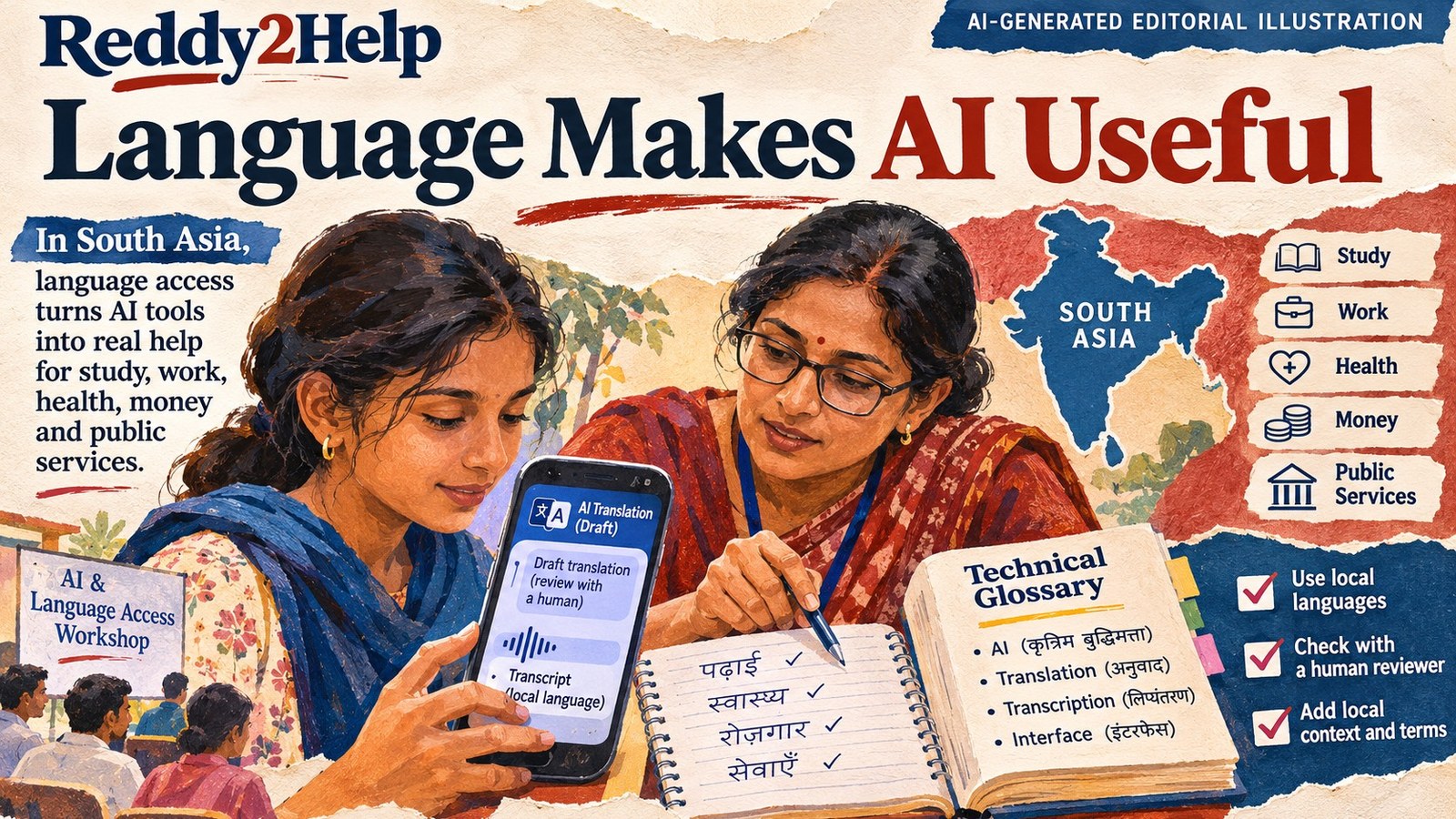
The language problem comes before the tool
A free AI tool is not equally available to everyone. A person may have a phone, a connection, and enough curiosity to try it, but still be blocked if the interface, examples, and answers assume fluent English. Language access is not a softer version of technical access. It decides whether a person can understand what the tool is doing.
This matters in a classroom, but it also matters at a bus stop, in a repair shop, or while someone is trying to understand a form. A tool that can explain an unfamiliar idea in a person’s strongest language has a different value from one that merely has a low price. That is the practical promise of local-language technology.
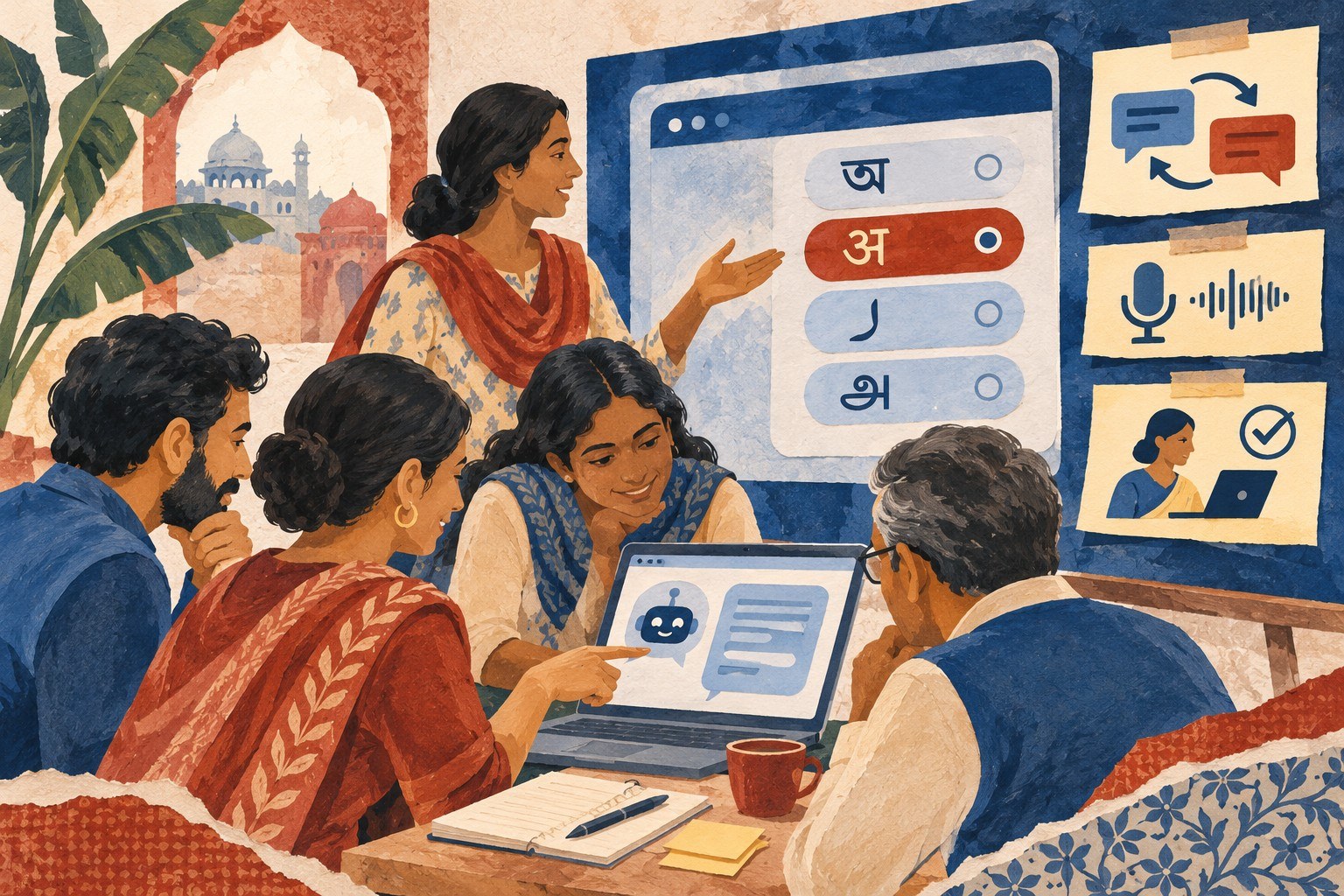
Translation is useful, but it is not the whole answer
Machine translation can help someone get started. AI translation can let a learner ask for a short explanation, compare two versions of a sentence, or turn a technical instruction into simpler language. Those are practical uses, not promises that a model understands a community perfectly.
The danger is that a fluent answer can still be wrong. A translated phrase may lose its level of politeness, its local meaning, or the detail that makes an instruction safe. Students should learn to treat translation as a draft that needs a human check, especially when the subject is health, money, work, or public services.
A useful language-access lesson can ask students to compare:
- the original request and the translated request
- the model’s answer with a trusted human explanation
- a clear sentence with one that sounds fluent but changes the meaning
Local knowledge cannot be reduced to vocabulary
The hardest part is often not finding a word. It is knowing which example will make sense to the person asking. A general explanation of a computer setting may be accurate but useless if it assumes a device, institution, or daily routine that the reader does not recognize.
This is where human review matters. Teachers and community workers can notice when an AI answer has the wrong context. They can also identify terms that should remain in the original language, because translating them would make the instruction less precise.
In a South Asia language workshop, a camera could point at a printed glossary beside a phone, with handwritten alternatives for technical terms. The important work is not the appearance of the device. It is the comparison between a system’s wording and the wording people actually use.
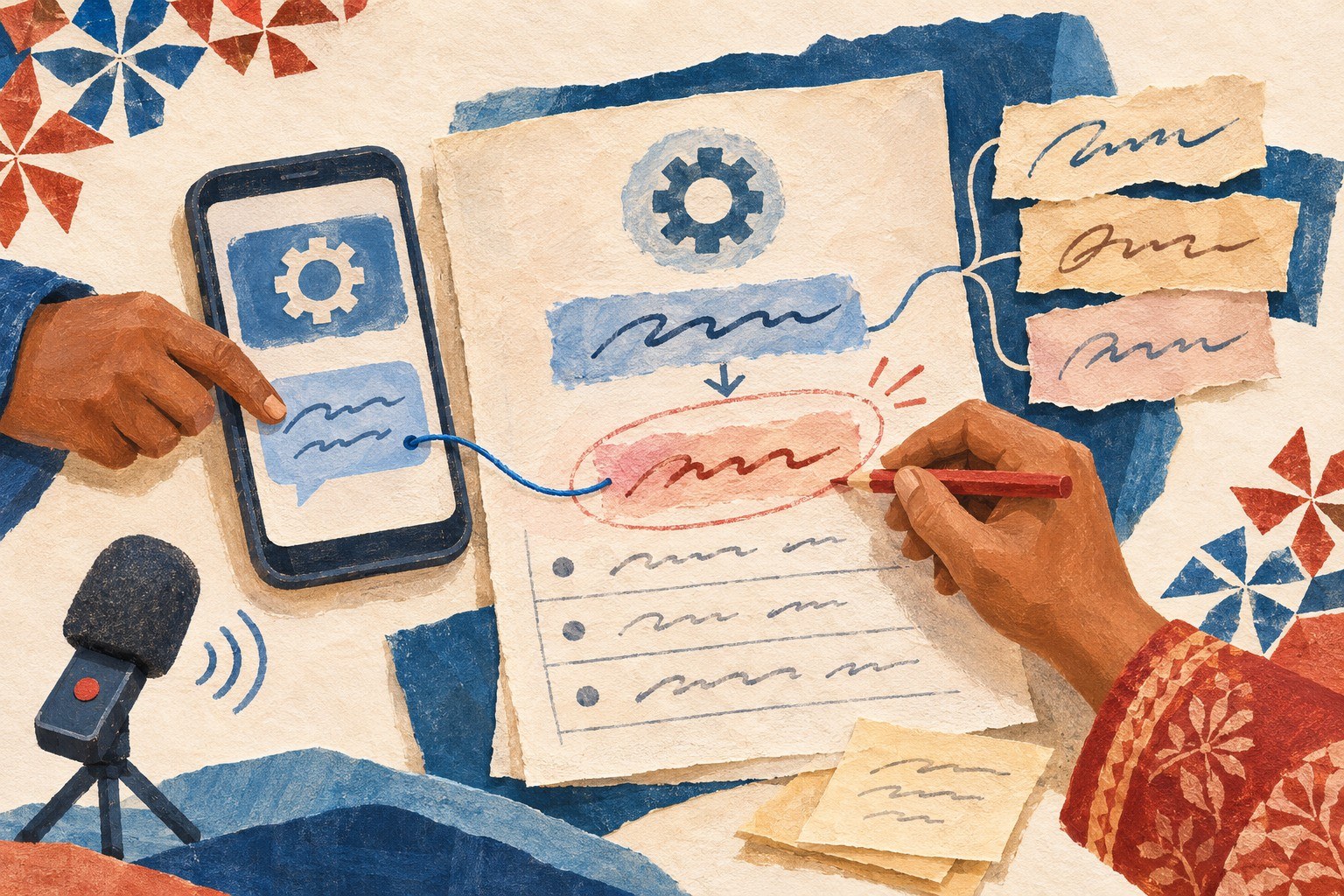
Voice can widen participation
Typing is not the only barrier. Some people find it easier to speak a question, listen to an explanation, or record a message before turning it into text. Voice tools may help a person begin a task without first mastering a keyboard or an unfamiliar spelling system.
That does not make voice systems automatically inclusive. Accents, background noise, uncommon names, and languages with limited training data can all produce errors. A responsible lesson shows students how to slow down, repeat, correct a transcript, and confirm the final meaning before sharing it.
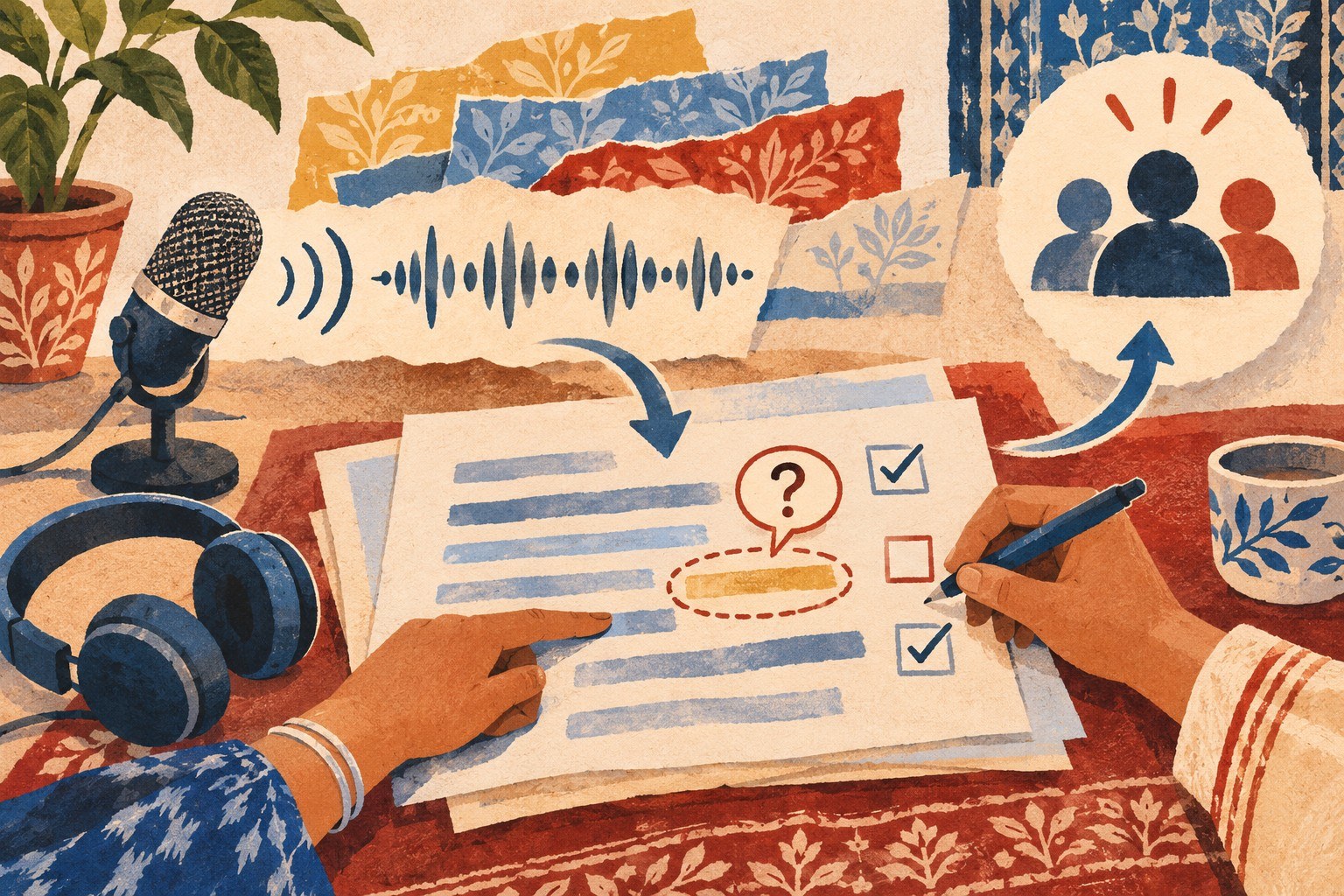
An audio transcript can also become a bridge between people. Someone might turn a spoken explanation into notes, then ask an AI tool to organize those notes into questions for a teacher. The tool supports the exchange. It does not replace the person who knows what the question means.
What a fair tool should make possible
The test for language access is practical: can a person use the tool to do something that was previously harder to start? The answer may be a clearer application, a translated repair instruction, a study question, or a message that another person can understand.
Reddy2Help’s technology education work should keep this test close to the ground. Students do not need to wait for a perfect model or a perfect local-language interface. They can learn to ask for simpler wording, compare outputs, identify missing context, and involve a human reviewer.
A language-access checklist is short:
- Can the user ask in the language they know best?
- Can the answer be checked by someone who understands the context?
- Can the tool show uncertainty instead of hiding it?
- Can the final result be shared with a real person?
A free tool is only a starting point. The larger opportunity is helping people shape technology around their own language, knowledge, and decisions. That is how AI access becomes useful rather than merely available.
How can AI tools help people who do not use English as their strongest language?
AI tools can help by translating explanations, simplifying technical language, and turning spoken questions into text. Their outputs still need review because translation and voice systems can miss local meaning, accents, context, or important details.