 Reddy2Help
AI lessons cannot begin when the electricity keeps disappearing
Reliable power, safe charging, and practical energy planning are part of making AI education useful to young people with limited resources.
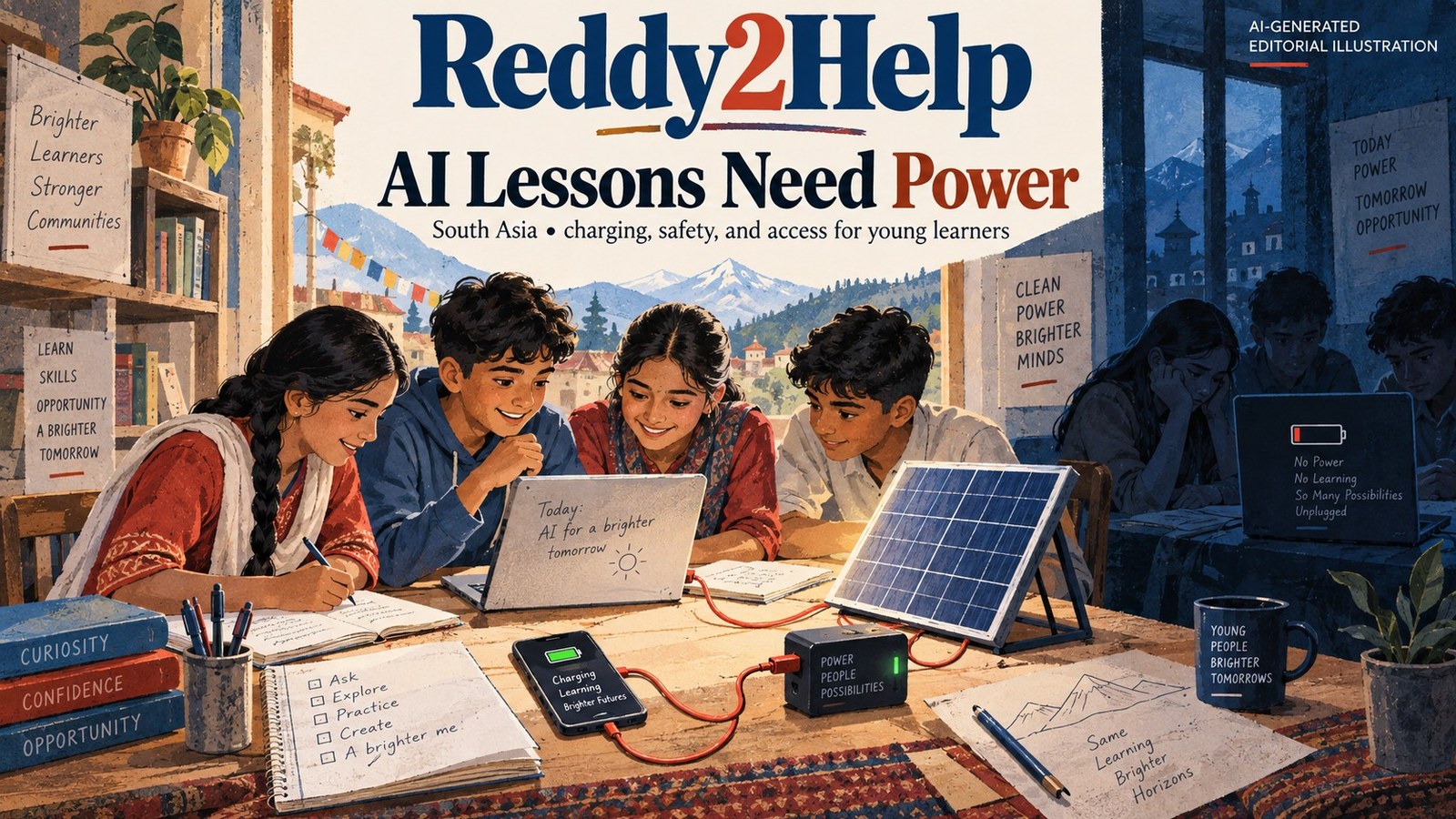
The lesson starts before the screen
An AI lesson appears to be about a question, a tool, and the person asking. In practice, it also depends on whether a device has enough power to open the tool, whether the room has usable light, and whether someone can charge the device again afterward. A lesson interrupted by a dead battery teaches a different limit than the teacher intended.
This matters most where electricity is expensive, unreliable, or shared between many needs. A young person may have access to a phone or borrowed laptop and still be unable to use it when the power is out. Technology education cannot treat energy as background scenery when energy decides who gets to stay in the lesson.
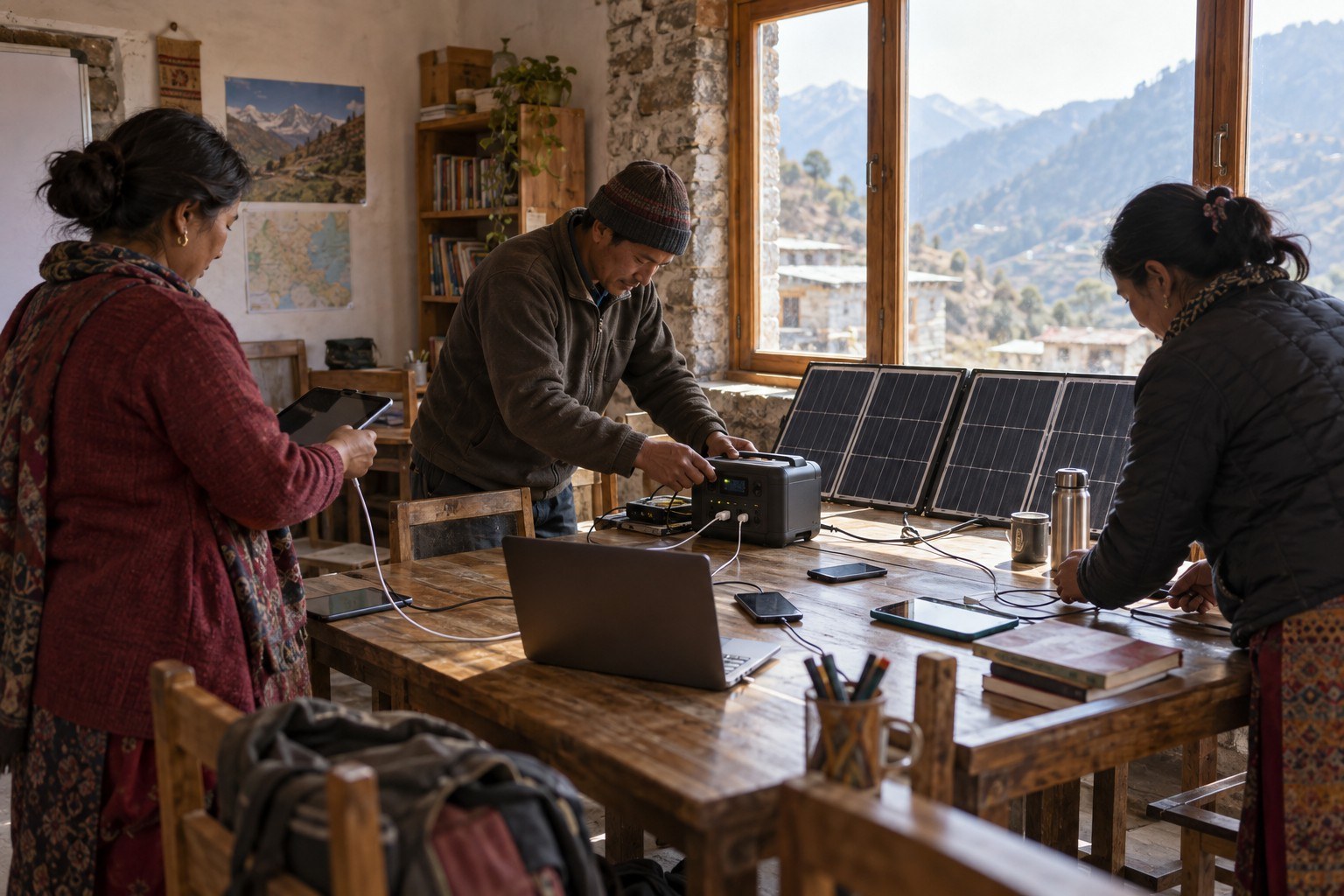
Power changes how a class is planned
A teacher working with limited electricity has to design around the power available. That can mean preparing questions while devices are charging, saving work locally, dimming screens, and choosing activities that do not require every student to be online at once. These are not technical details added after the lesson. They shape the lesson from the beginning.
A useful class might move through a simple sequence:
- Discuss the problem without devices.
- Use a shared device for a focused task.
- Save the result in a form students can read later.
- Review what they made when power is available again.
This approach keeps a short outage from erasing the whole session. It also makes the central skill visible: students are learning how to use a tool within real limits, not pretending those limits do not exist.
Charging is a shared resource
A charging point can become a small piece of infrastructure for a whole community. Students may need to agree on which device is used first, how long it remains connected, and where completed work is stored. Those decisions offer a practical way to learn about cooperation, maintenance, and fair access alongside digital skills.
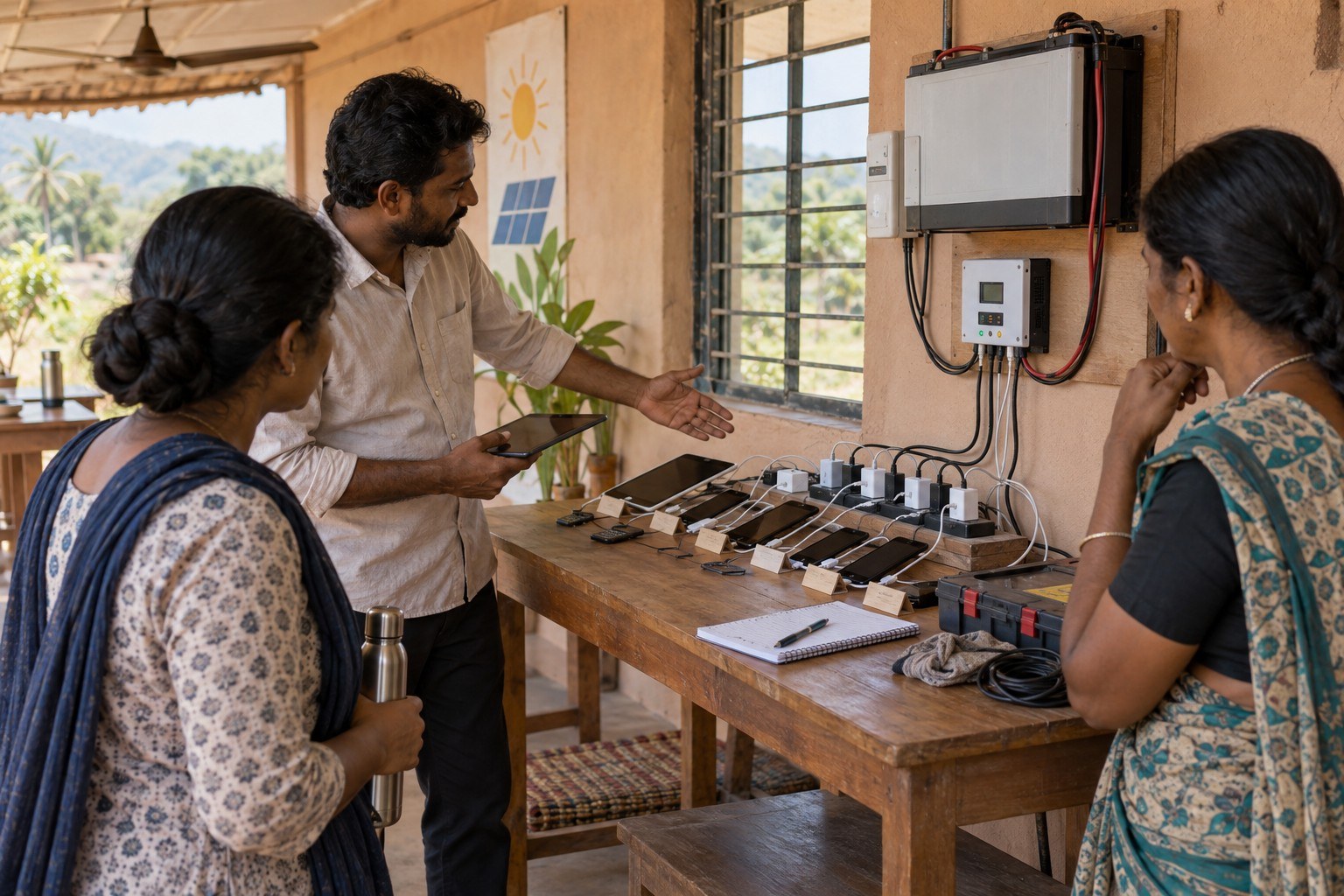
The same principle applies outside a classroom. A community center, library, or youth program may have one reliable outlet, a battery system, or a solar setup that supports several activities. The important question is not whether the equipment looks advanced. It is whether people can understand it, use it safely, and keep it working without depending on a specialist who is always far away.
Reddy2Help’s work is grounded in the idea that free tools can widen opportunity. That promise is incomplete if the people who most need those tools cannot keep a device powered long enough to practice. Energy access is not separate from digital access. It is one of the conditions that makes digital access real.
Small systems teach useful habits
Energy planning can also improve how students think about technology. They can ask what a tool requires, what happens when one part fails, and which tasks should be completed first. Those questions are useful beyond AI. They apply to a phone, a water pump, a repair bench, or any system that must serve people with limited resources.
A teacher can invite students to observe the room before opening an application. Where does the light come from? Which devices are charged? What work must be saved before the session ends? Which activity can continue on paper? The answers turn an invisible constraint into something students can examine and improve.
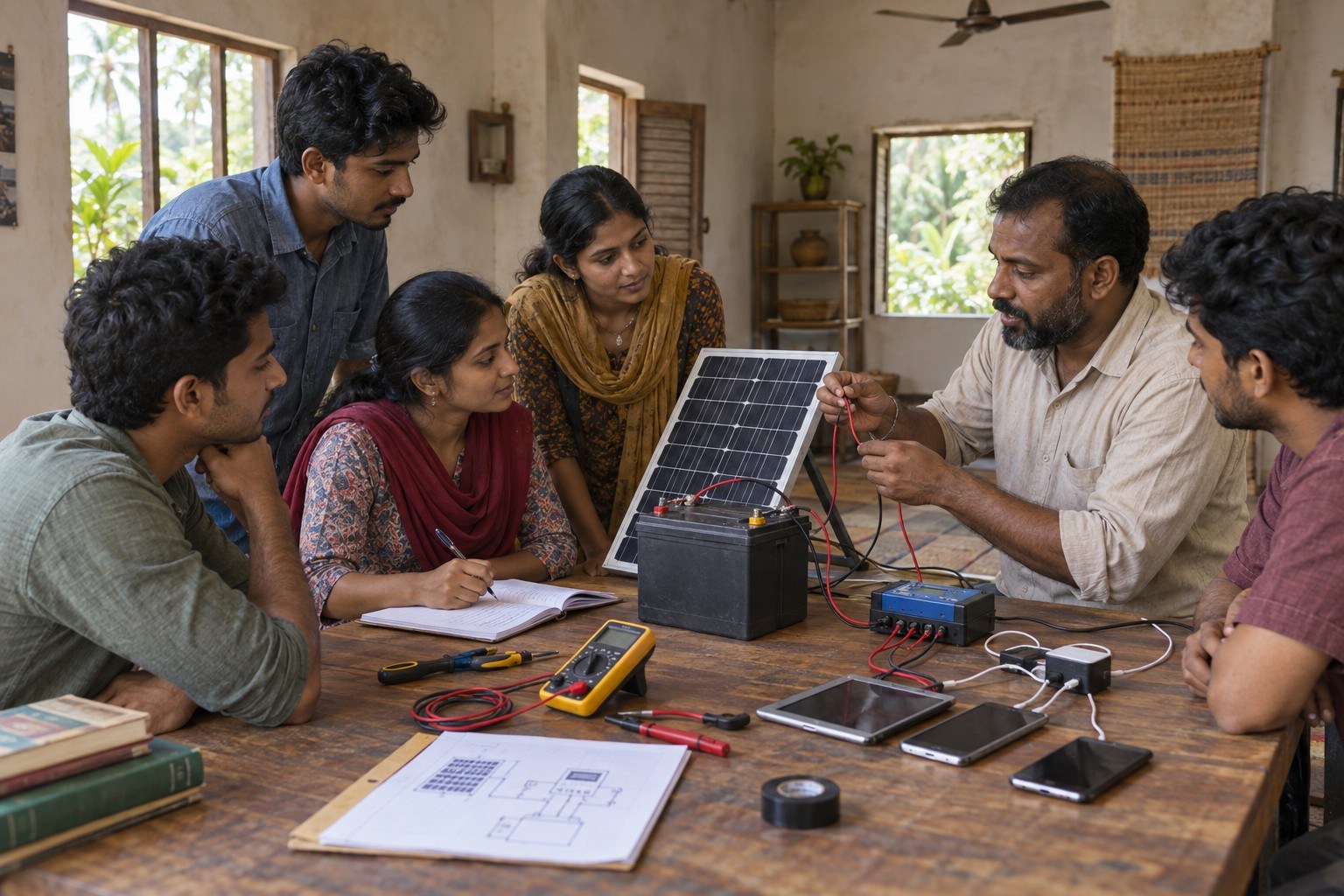
This is also a safeguard against waste. If a lesson requires constant connectivity or a powerful device, it may exclude the students it was meant to reach. If it can be prepared, shared, paused, and continued, more people can take part. Good design does not make scarcity disappear. It reduces the amount of learning that scarcity interrupts.
Access means being able to return
The first successful AI exercise can feel important, but lasting access is measured by whether a student can return to the work. That requires more than curiosity. It requires a device, power, a place to work, and a plan for saving what was learned. When those pieces are considered together, a free tool has a better chance of becoming a useful skill.
For educators, the practical lesson is clear: ask about electricity before choosing the application. For students, it is equally important to learn how to work when conditions change. The strongest technology education prepares them not only to ask better questions, but also to keep learning when the screen goes dark.
Reddy2Help sees sustainable technology education as a way to put useful tools in the hands of people with the least room for expensive mistakes. Reliable power will not solve every barrier to learning. But without a workable way to charge, save, and return, even the most accessible AI tool remains only briefly within reach.
Can students learn AI if their electricity supply is unreliable?
Yes, but the lessons must be designed around charging, offline work, shared devices, and saving progress before power runs out. Reliable electricity is part of digital access because students need a practical way to return to the tools they are learning.