 Reddy2Help
AI tools are less useful when they cannot understand a student’s language
Free AI access means little when a student’s strongest language is missing from the tools they are expected to use.
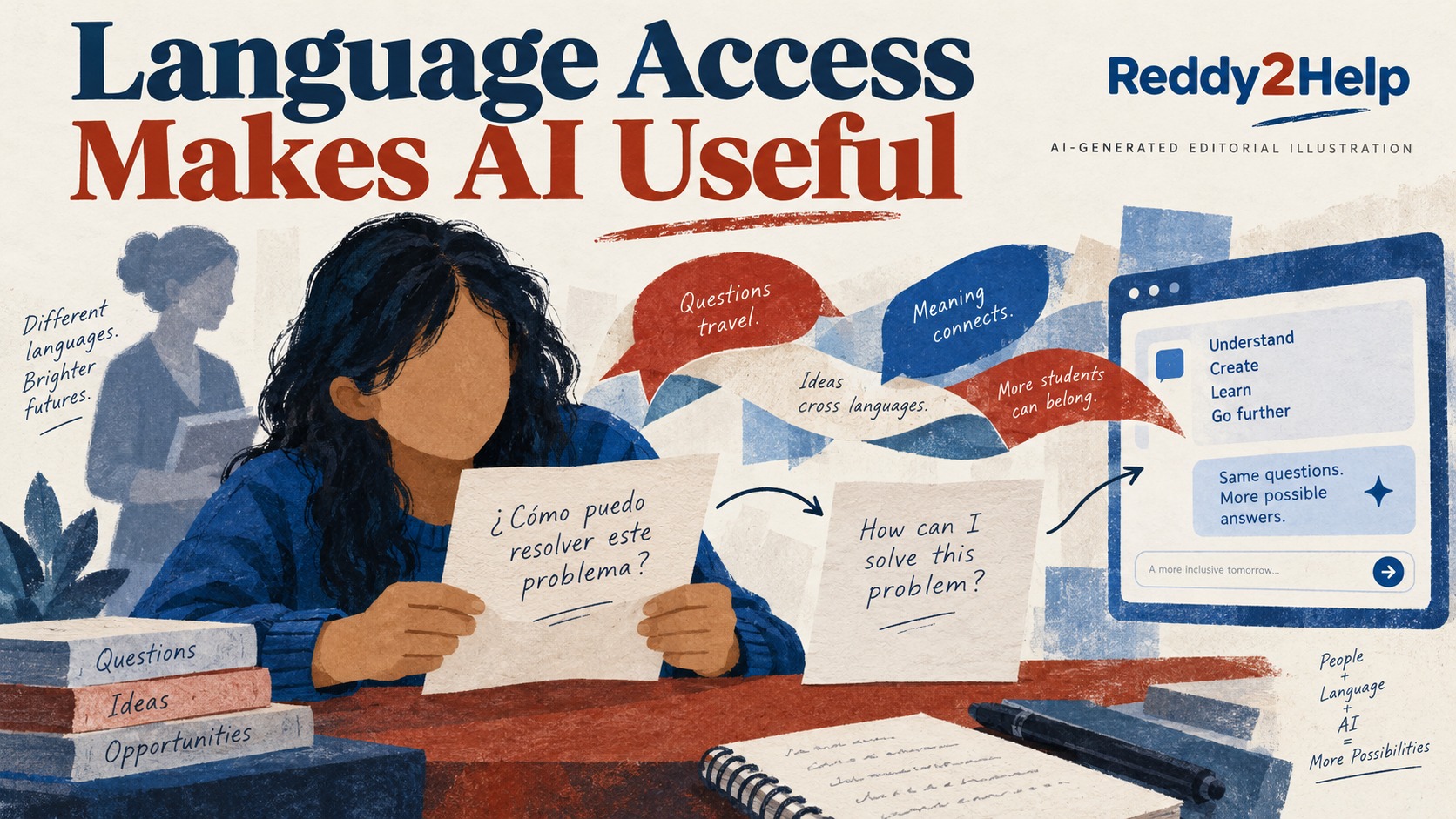
A free tool can still leave someone out
A student can have a borrowed laptop, a working connection, and permission to use an AI assistant, yet still meet a locked door. The tool may understand English well and handle a major regional language reasonably. It may struggle with the language the student speaks at home, the one used by grandparents, or the one used in the nearest village.
That gap is easy to miss when access is measured by devices and data. A login screen does not tell us whether a student can ask a useful question. A polished answer does not tell us whether the tool understood the words that came first.
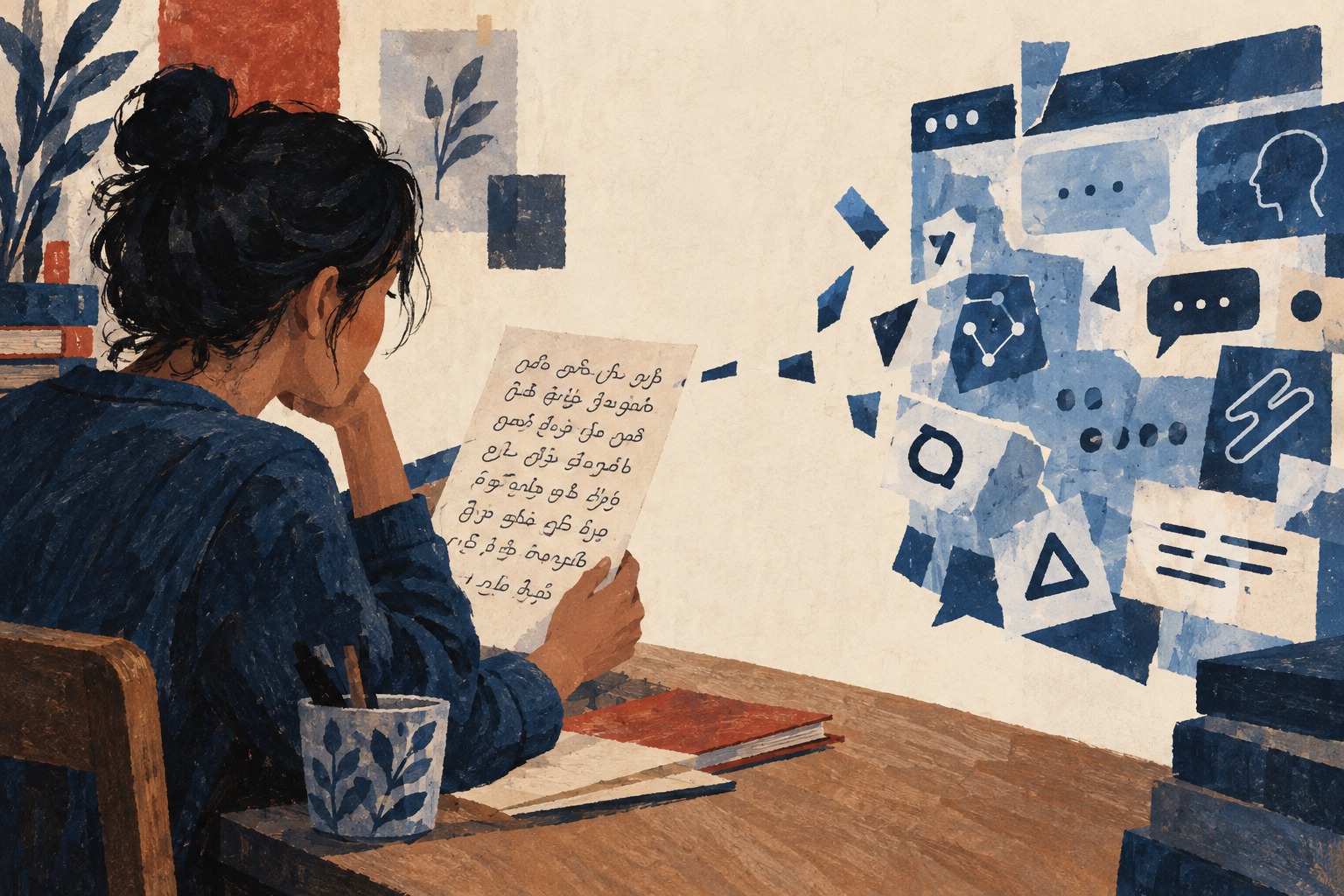
Translation is not the same as understanding
Students often work around this problem by translating a question into a language the tool handles better. That can help, but it also adds another place for meaning to shift. A local name may be changed. A farming term may become a broad word. A sentence about respect, illness, or responsibility may lose the part that mattered most.
The student then has to check two things instead of one: whether the answer is correct, and whether the translation preserved the question. That is a lot to ask from someone who is still learning how to judge an AI response in the first place.
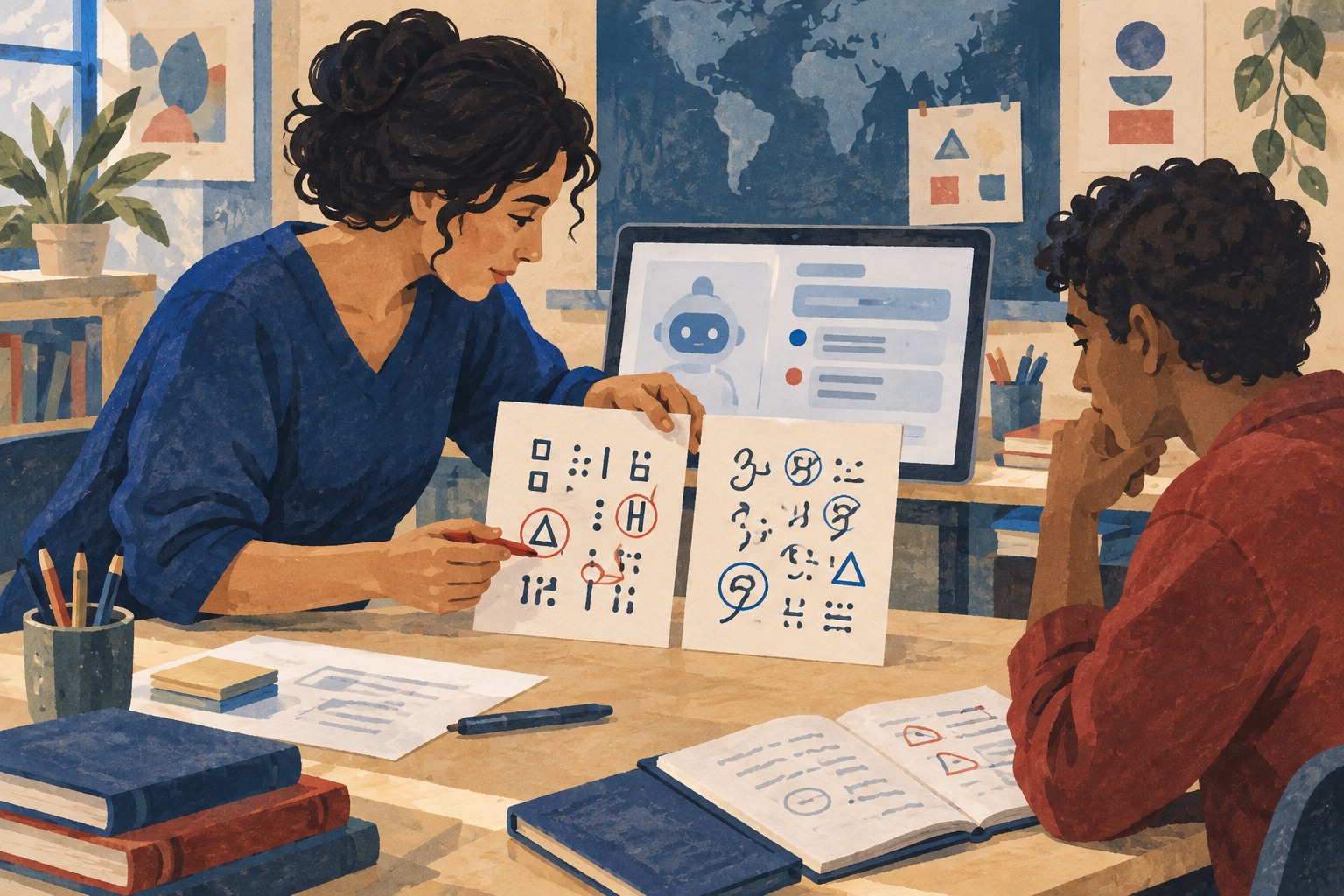
A teacher can make the process visible without pretending translation is perfect. The class can compare the original question, the translated version, and the answer. Students can circle the words that changed and discuss what the change did to the meaning.

The missing language is also missing knowledge
When a tool performs poorly in a language, the problem is not only inconvenience. It can make a student’s knowledge look smaller than it is. A student may know the name of a plant, a local custom, or a repair technique in one language and have no easy way to ask about it in another.
That matters in a classroom because the first question should come from the student’s life. If the tool only works after the student leaves that life at the door, the lesson teaches adaptation to the software rather than confidence with technology.
A useful exercise is to begin on paper. Students write a question in the language they choose, explain what they mean to a partner, and then decide whether an AI tool can help. The tool becomes one part of the work, not the judge of which language counts.
- Keep the original question beside any translation.
- Ask a person who knows the language to check important meanings.
- Treat a strange answer as a reason to investigate, not as proof that the question was poor.

What teachers can ask of the tools
Teachers do not need to promise that an AI assistant understands every language. They can ask a smaller and more useful set of questions. Which languages can the tool read? Which can it answer? Does it explain uncertainty, or does it produce confident text when it has little to work with?
Students can test those questions with ordinary material from the classroom. They might enter the same short explanation in two languages, compare the replies, and mark where the tool changes a name or leaves out a detail. The point is not to rank one language above another. It is to see the limits before relying on the result.
This also gives students a reason to keep their own words. A notebook with the original phrase, its explanation, and the tool’s response is more useful than a translated answer copied without a trace of how it was made.
Better access starts with being heard
The technology will improve unevenly. Some languages will gain better spelling support, speech recognition, and translation before others. Schools cannot control that order, but they can refuse to treat the gap as a student’s failure.
Reddy2Help’s work with young people is about showing what free tools can do. It also has to show where they stop. A student who learns to keep the original question, ask for help with meaning, and check an answer against people and sources is learning a skill that works even when the software does not.
The best AI lesson may begin with a language the tool cannot handle well. That is where students can see that technology is something to examine and shape, not a gatekeeper they must please before their knowledge becomes visible.
Why do free AI tools still exclude students who speak local languages?
Free AI tools can exclude students when they understand major languages better than the languages students use at home. Keeping the original question, checking translations with people who know the language, and testing the tool’s limits helps students use AI without treating its mistakes as their own.