 Reddy2Help
AI should make public information easier to understand
AI education should include the practical skill of turning confusing public information into clear, checkable guidance without pretending the tool is an authority.
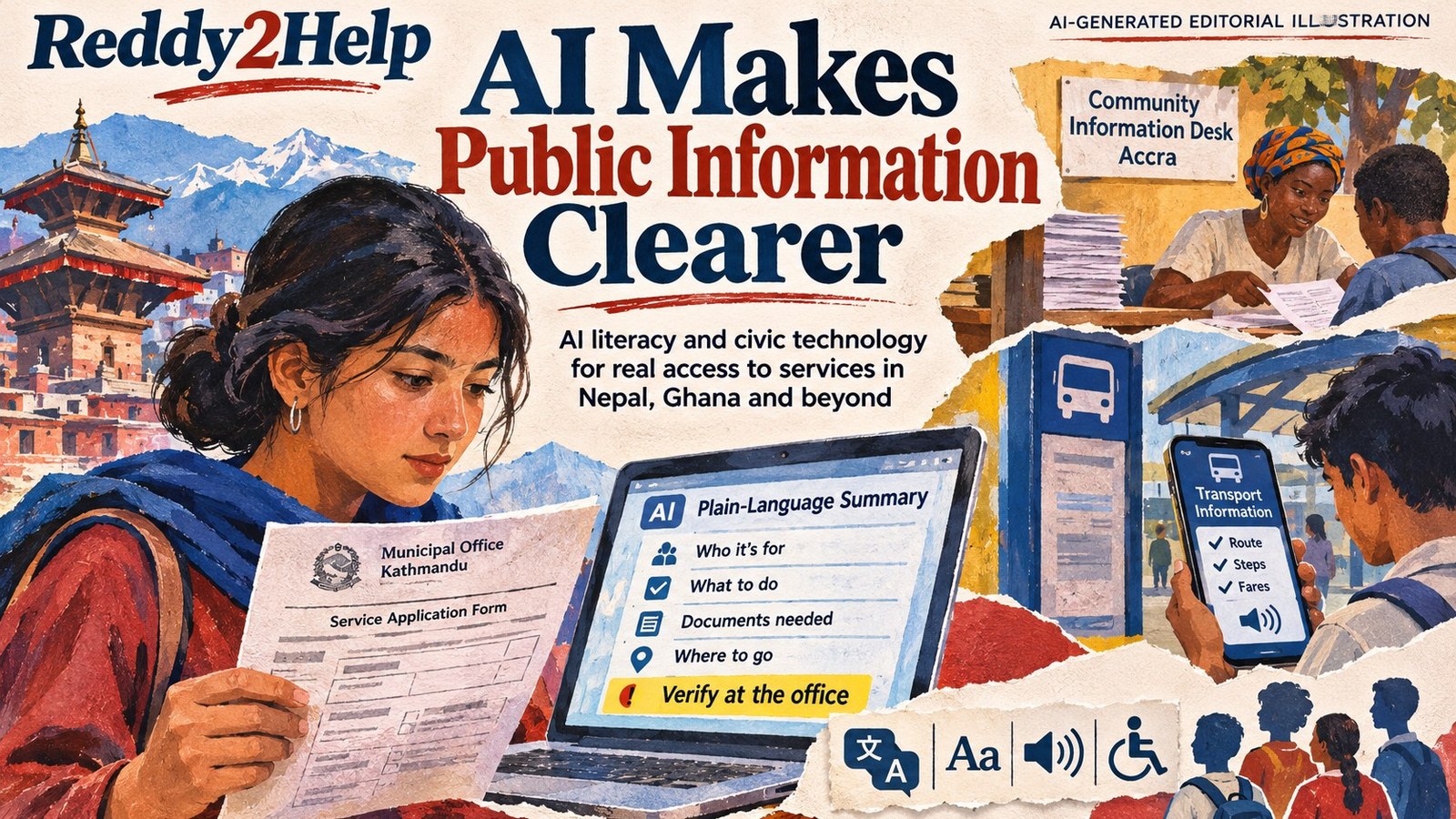
The problem is often the page
A person can have a phone, an internet connection and enough reading ability to be blocked by a public notice. Forms, service instructions and school announcements often assume that readers already understand official language, local procedures and the order in which tasks must be completed.
This is a useful subject for AI literacy because the work is not simply asking a chatbot for an answer. It is finding the original information, asking for a plain-language explanation, checking what the tool changed and keeping the parts that still need confirmation from a human office. Plain-language tools can support that process without becoming the source themselves.

A translation is not a decision
In a session, a teacher could give students a fictional public notice and ask them to separate facts from instructions. The students might ask an AI tool to rewrite the notice for someone reading quickly on a phone, then compare every sentence with the source.
That comparison matters. A tool can make a paragraph sound confident while dropping a condition, changing a date or turning an example into a rule. Students should learn to mark uncertainty rather than smoothing it away.
A careful workflow might ask:
- What does the original document actually say?
- Which words have been simplified or removed?
- What must a person confirm with the responsible office?
- Can another reader follow the explanation without seeing the prompt?
The useful work is structure
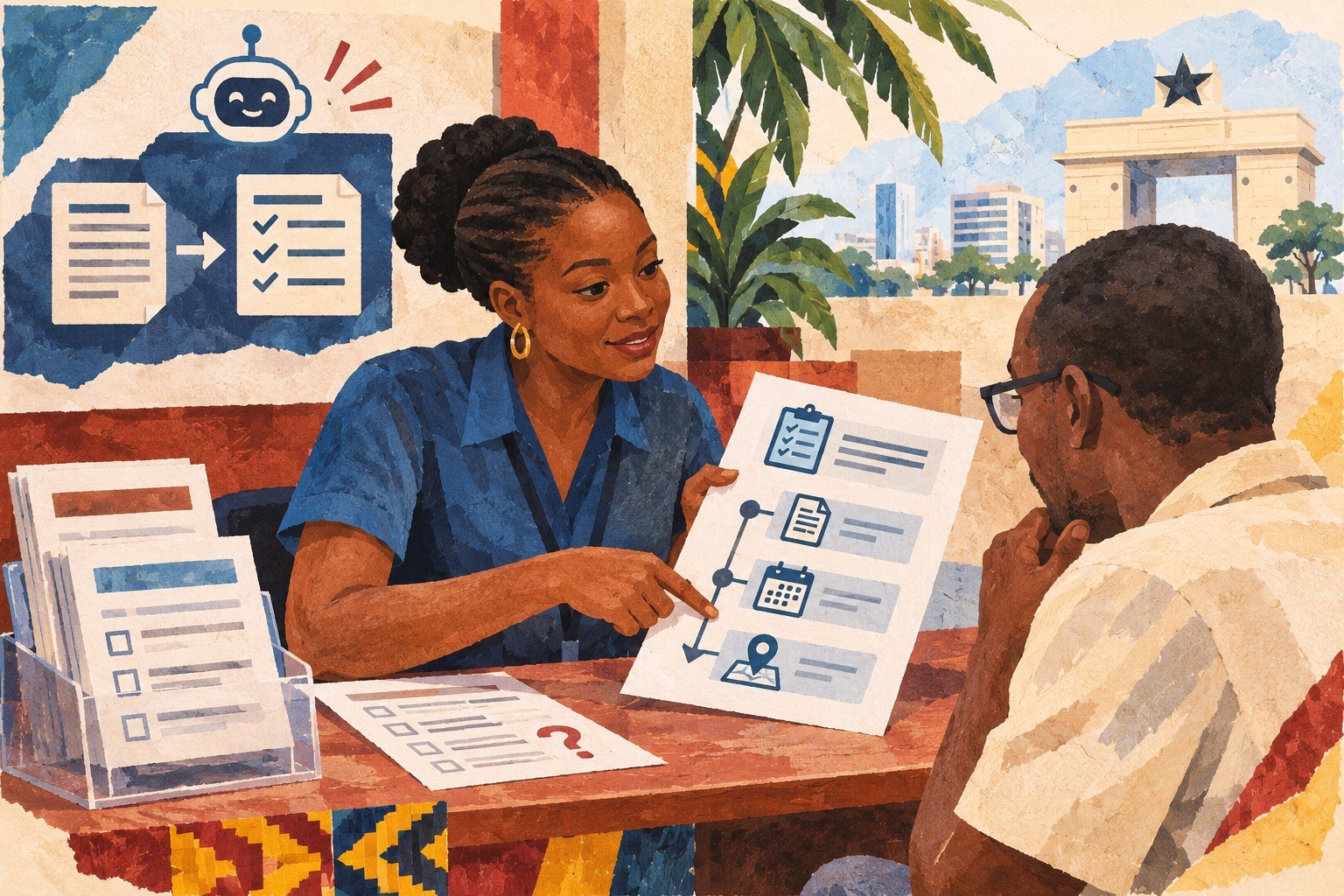
The strongest use of AI here may be organizing information rather than generating an answer. Students can turn a long notice into headings such as who it concerns, what action is required, what documents are mentioned and where a question should be directed.
That is civic technology in a modest but important form. It does not replace a public worker, interpret a person’s legal position or promise that a service is available. It helps a reader see the shape of information that was difficult to navigate.
A good classroom exercise would deliberately include an incomplete notice. Students would have to identify the missing detail and write a question for the office instead of asking the model to guess. The lesson is that a gap in the source remains a gap.
Language and access are connected
Plain language is only one part of access. A person may need a different language, a larger type size, a spoken version or a format that works with assistive technology. Each change can make information more usable, but each can also introduce an error that was not present in the source.
Students can test the same explanation in several formats and look for what disappears. Does the short version keep the eligibility condition? Does the spoken version preserve the sequence? Does the screen-reader-friendly version identify every heading and list clearly?
This gives technology education a practical standard: the result should help a real reader complete a real information task, while making its limits visible. Accessibility is not decoration added after the answer is written.
A small tool with a clear boundary
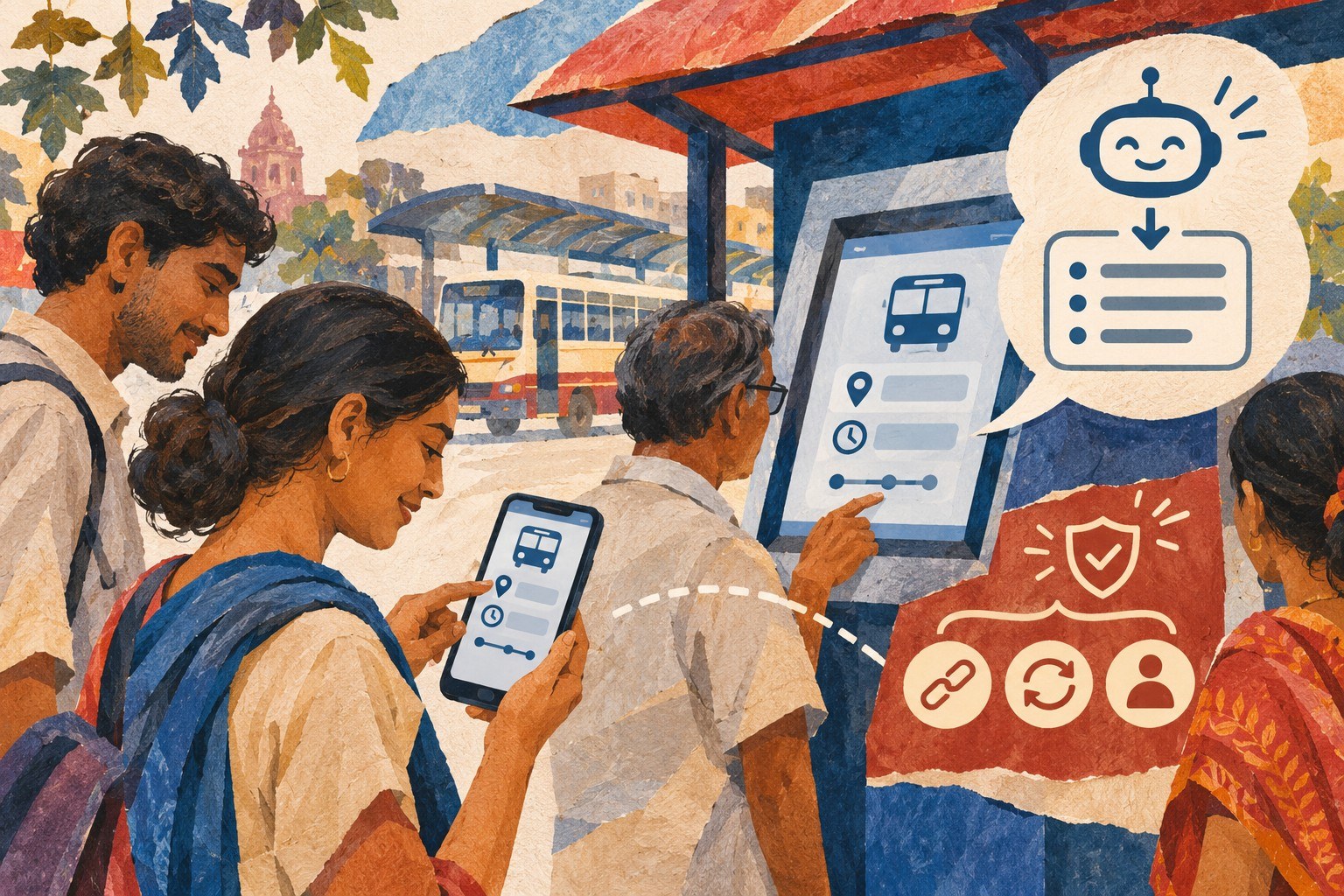
The best classroom projects would keep the tool narrow. A student could design a prompt template that asks for a summary, a list of unresolved questions and a comparison against the source. The template could be reused for a school notice, a transport instruction or a health-service page without claiming to provide professional advice.
The student would also write the warning that travels with the tool: check the original, confirm changing details and ask the responsible person when the consequence matters. That warning is part of the product, not a footnote.
Reddy2Help’s work is about putting capable tools within reach of young people who have been excluded from expensive technical education. Teaching them to clarify public information adds another kind of capability. It shows that AI can reduce friction without becoming an authority.
What students should take away
The lesson is not that every confusing page can be fixed by software. Some information is incomplete, some systems are hard to reach and some decisions belong to accountable people. AI can help a reader prepare, compare and ask better questions, but it cannot make an uncertain source trustworthy.
A student who understands that boundary has learned something more durable than a clever prompt. They know how to preserve the source, expose uncertainty and design for the person who will use the result. Those habits make AI literacy useful beyond the classroom.
Can AI help people understand difficult public information without replacing the responsible office?
AI can help turn complicated public information into clearer summaries, structured steps and useful questions, but the original source must remain visible and important details should be confirmed with the responsible office. Reddy2Help teaches AI literacy as careful checking and accessible communication, not as a substitute for accountable human decisions.