 Reddy2Help
AI practice should help students speak to real people
AI becomes more useful when students use it to rehearse practical conversations and then communicate in their own words.
The rehearsal is part of the lesson
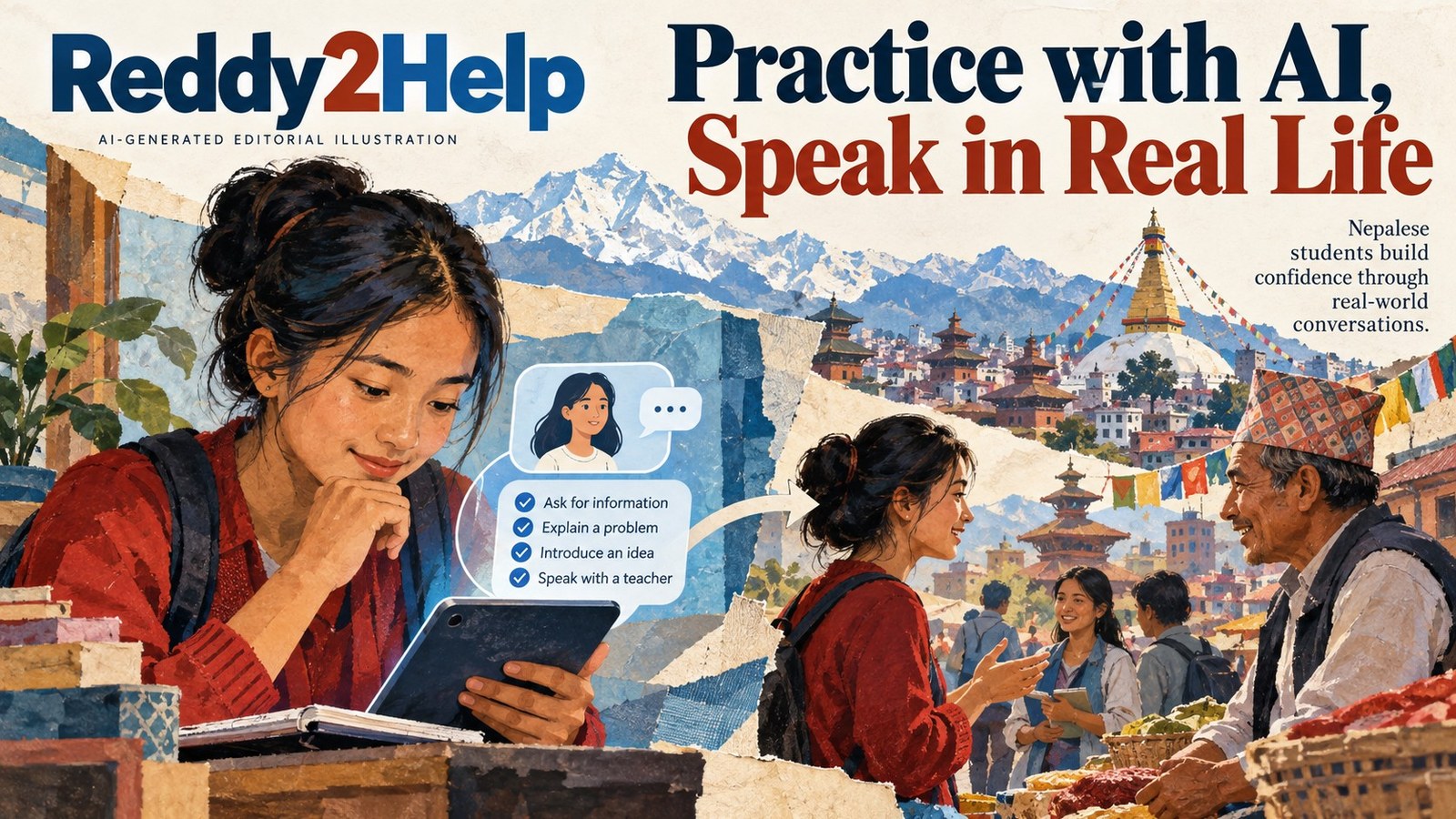
An AI tool can produce a polished sentence before a learner has worked out what they want to say. That speed is useful, but it can hide the hardest part of communication: choosing a purpose, a listener, and a next step. A stronger lesson treats the tool as a rehearsal partner, not the person who performs the conversation.
At the Asha school, a session can begin with a practical situation rather than a blank prompt. A learner might need to ask a shopkeeper for information, explain a problem with a device, or introduce an idea to someone who has not heard it before. The important work is deciding what the other person needs to understand.
A safe place to try again
Rehearsal matters because real conversations carry consequences. Someone may be nervous about asking a teacher for clarification, speaking to a customer, or describing a service to a neighbor. An AI tool can offer a private place to try several openings before the learner chooses one to say aloud.
That does not make the tool a substitute for another person. The useful sequence is simple: write a rough version, ask for possible improvements, read the result aloud, and change anything that does not sound like you. The learner remains responsible for the meaning, the tone, and the decision to use the words.
A good practice round can include:
- Say the goal in one sentence.
- Ask for two different ways to begin.
- Explain which version feels natural and why.
- Try the conversation without looking at the screen.
The person on the other side
The strongest communication practice is not about sounding impressive. It is about noticing what another person may know, fear, or need. A request to a local office may need a clear question. An explanation to a customer may need a concrete example. A message to a neighbor may need fewer technical words.
This is where an AI lesson can become a lesson in empathy without pretending that software has empathy. Students can ask the tool to show how the same idea might be understood by a beginner, a busy worker, or someone unfamiliar with technology. Then they can decide which differences matter and which are merely changes in style.
The exercise also reveals a limit. A generated reply may sound polite while missing the actual concern. It may use formal language that feels distant, or suggest a promise the speaker cannot keep. Rehearsal is valuable precisely because the learner can spot those problems before another person has to.
From practice to useful work
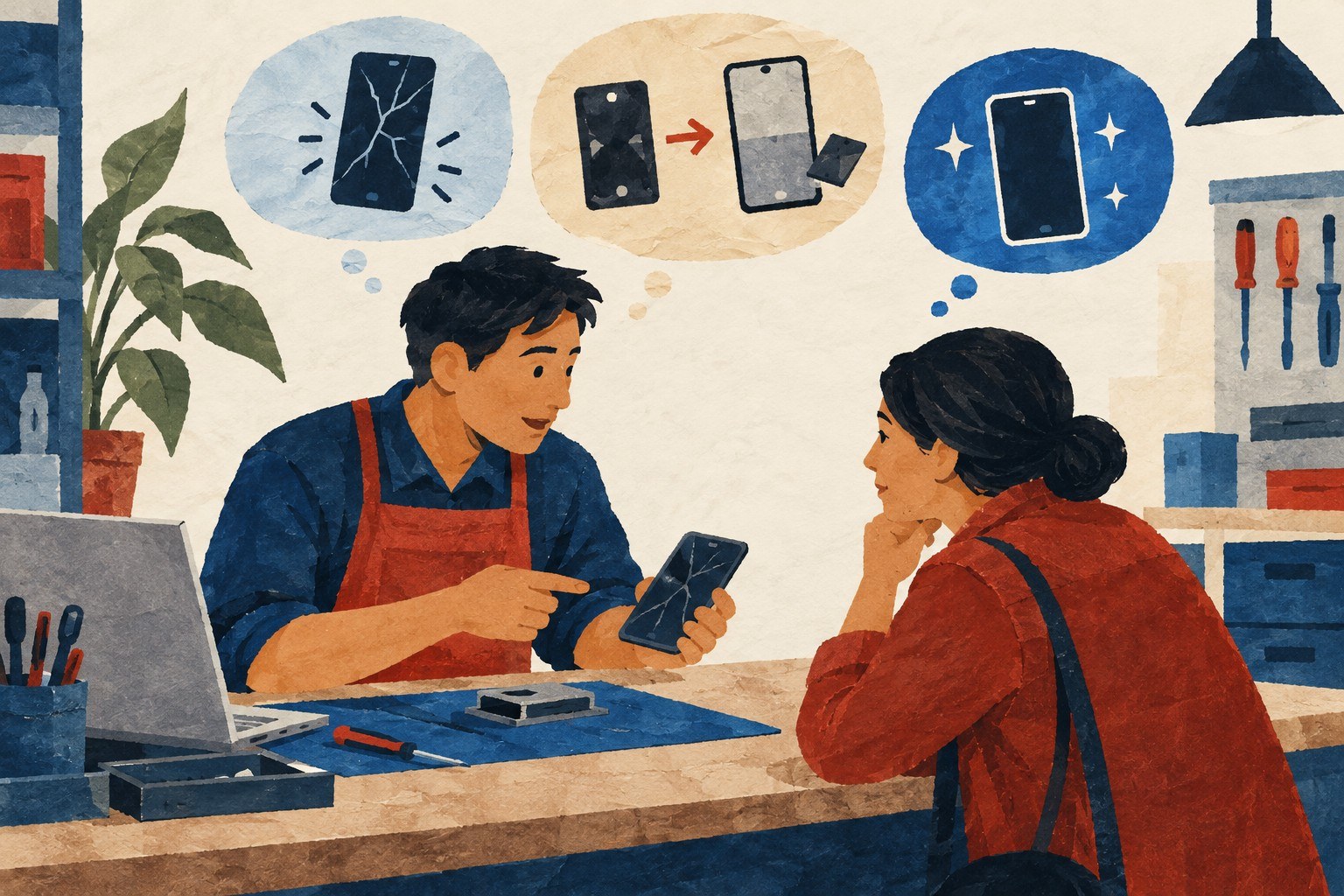
Communication becomes a practical skill when it helps someone complete a real task. A learner who can explain a process clearly may be better prepared to help a family business, support a community project, or describe their own work. The AI tool is only one part of that preparation.
The final test should happen away from the app. Can the learner explain the idea in their own words? Can they listen to a response and adjust? Can they admit that they do not know something and ask a better follow-up question? Those abilities remain useful even when the tool changes or disappears.
What a teacher can protect
A teacher gives rehearsal a boundary and a purpose. They can keep practice situations ordinary, avoid asking students to disclose private family details, and make room for several ways of speaking. They can also remind the group that confidence is not the same as certainty.
That balance matters for Reddy2Help’s work in sustainable tech and AI education. The goal is not to make young people sound like software. It is to help them use accessible tools to think, practice, and communicate with more control in the world around them.
An AI lesson succeeds when the learner leaves with something stronger than a generated answer: a clearer purpose, a voice they recognize, and the ability to speak to a real person without the app standing between them.
How can students use AI to practice communicating with real people?
Students can use AI to rehearse practical conversations, compare different ways to express an idea, and identify language that does not sound natural to them. The goal is not to copy a generated response but to practice explaining, listening, adjusting, and speaking in their own words.