 Reddy2Help
AI becomes useful when students use it to make something for someone else
At Asha school, the strongest AI lesson is not about producing an answer but about turning a local problem into a small, testable tool.
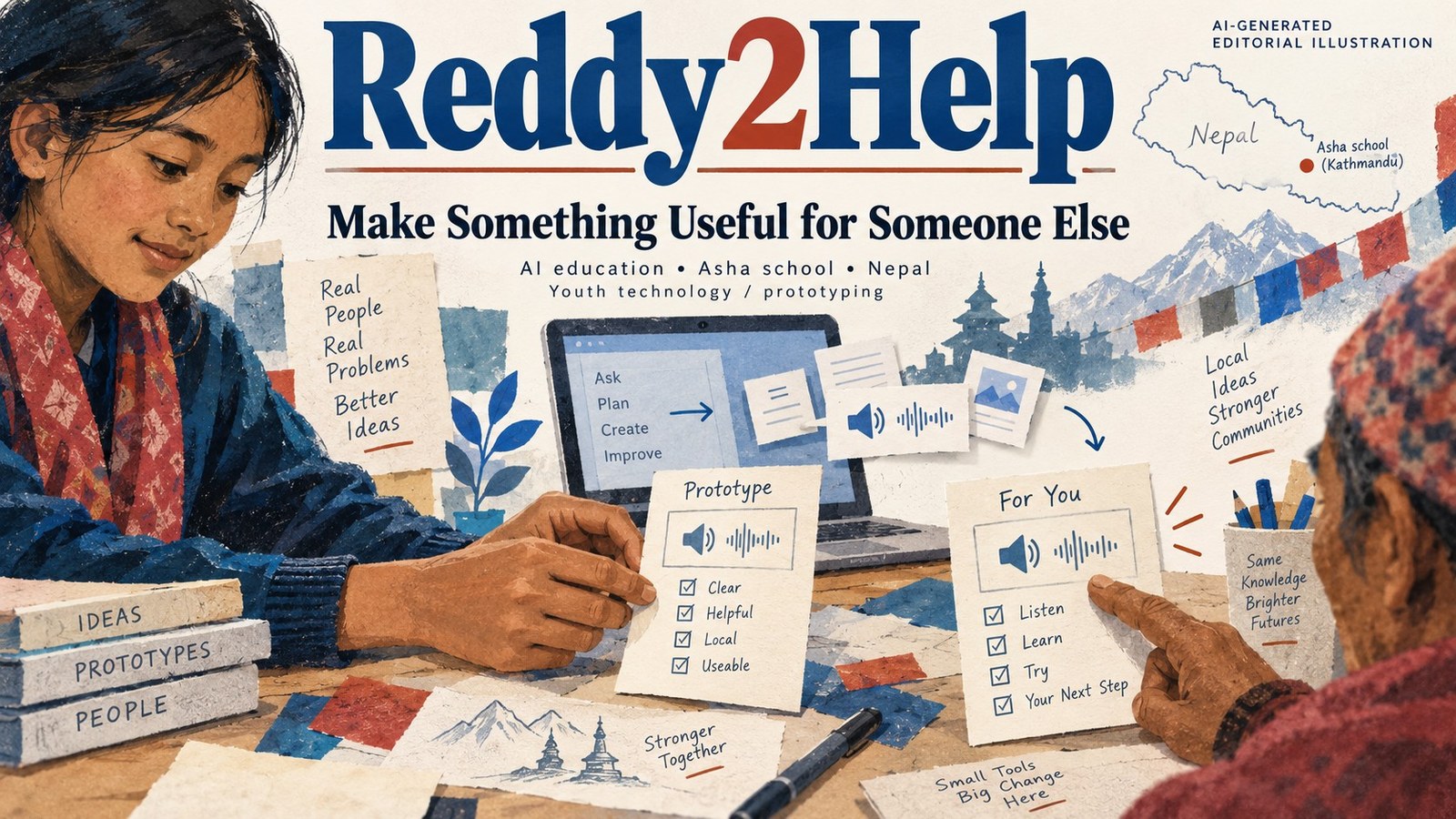
A tool needs a real user
An AI lesson can end with a polished paragraph that nobody needs. A stronger lesson asks students to make something for a real person: a clearer notice, a simple checklist, an audio explanation or a small practice activity. The point is not to make technology look impressive. It is to help a student see that a problem can be examined, changed and tested.
That change matters at Asha school because the starting question is no longer “What can AI do?” It becomes “Who is this for, and what would make their day easier?” A student can begin with an observation from school or the neighborhood, then use a free tool to help organize ideas without handing the tool responsibility for the final decision.
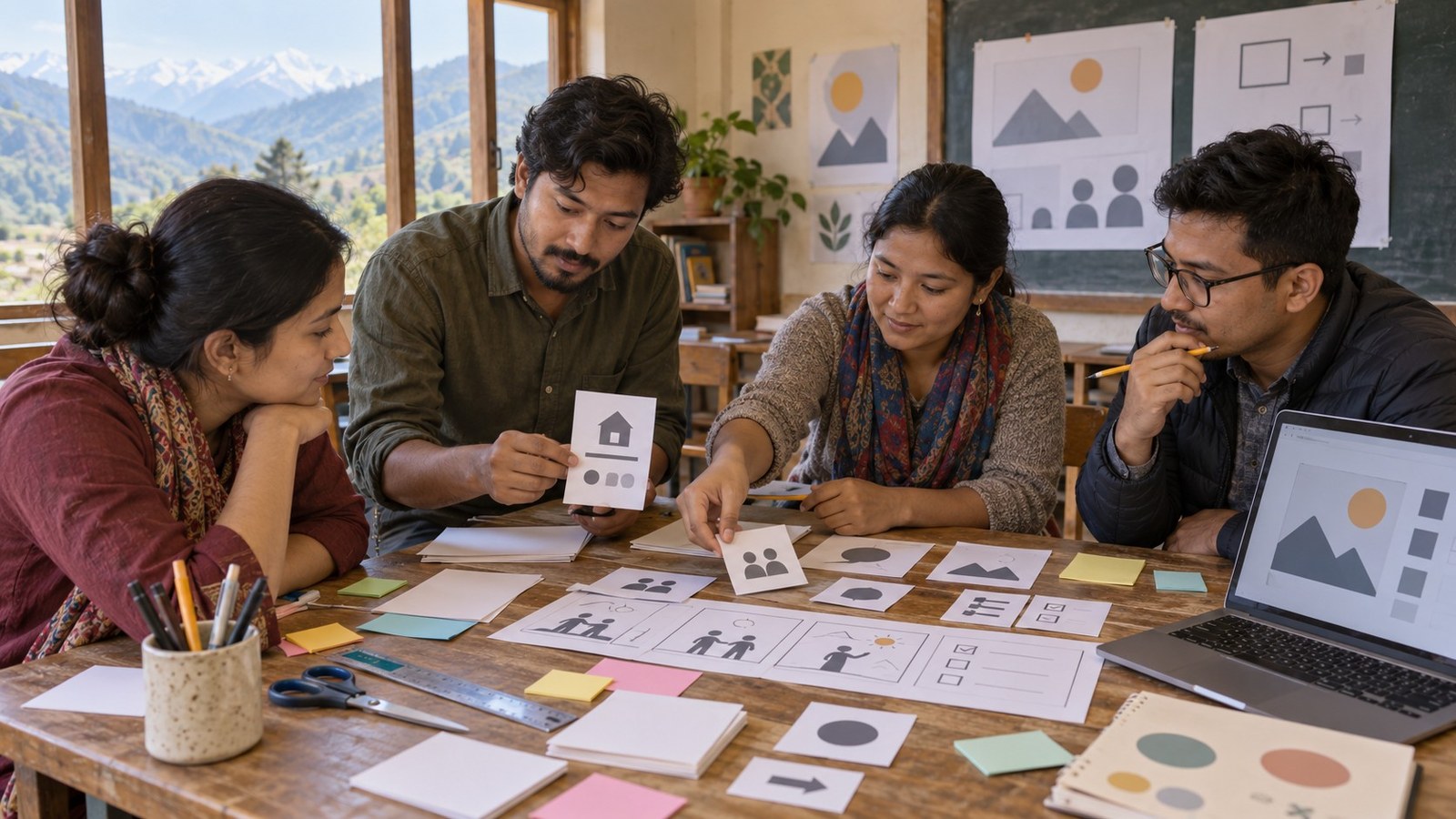
From observation to a first version
Our sessions can treat making as a sequence rather than a single prompt. Students first describe the problem in ordinary language. They then ask AI for possible formats, choose one, make a rough version and show it to somebody who might use it.
A useful first version could be a step-by-step guide for sorting school materials, a practice quiz written in familiar language or an audio script for someone who prefers listening. The tool may help with wording or structure, but students still decide whether the result is understandable and appropriate.
A short working cycle looks like this:
- Notice a task that is confusing, slow or easy to forget.
- Describe the person who needs help with it.
- Ask for several possible formats, not one finished answer.
- Make a small version that can be tested.
- Change it after someone tries to use it.
Making teaches judgment
This kind of project gives students a reason to question AI output. If a suggested instruction uses unfamiliar words, leaves out an important step or assumes access to equipment, the problem becomes visible when another person tries to follow it. A finished-looking response is not the same as a useful one.
The teacher’s role is to keep the project small enough to examine. Instead of praising a long response, the teacher can ask what changed, which part came from the student and what evidence shows that the tool works. Those questions turn AI from an answer machine into material for thinking.
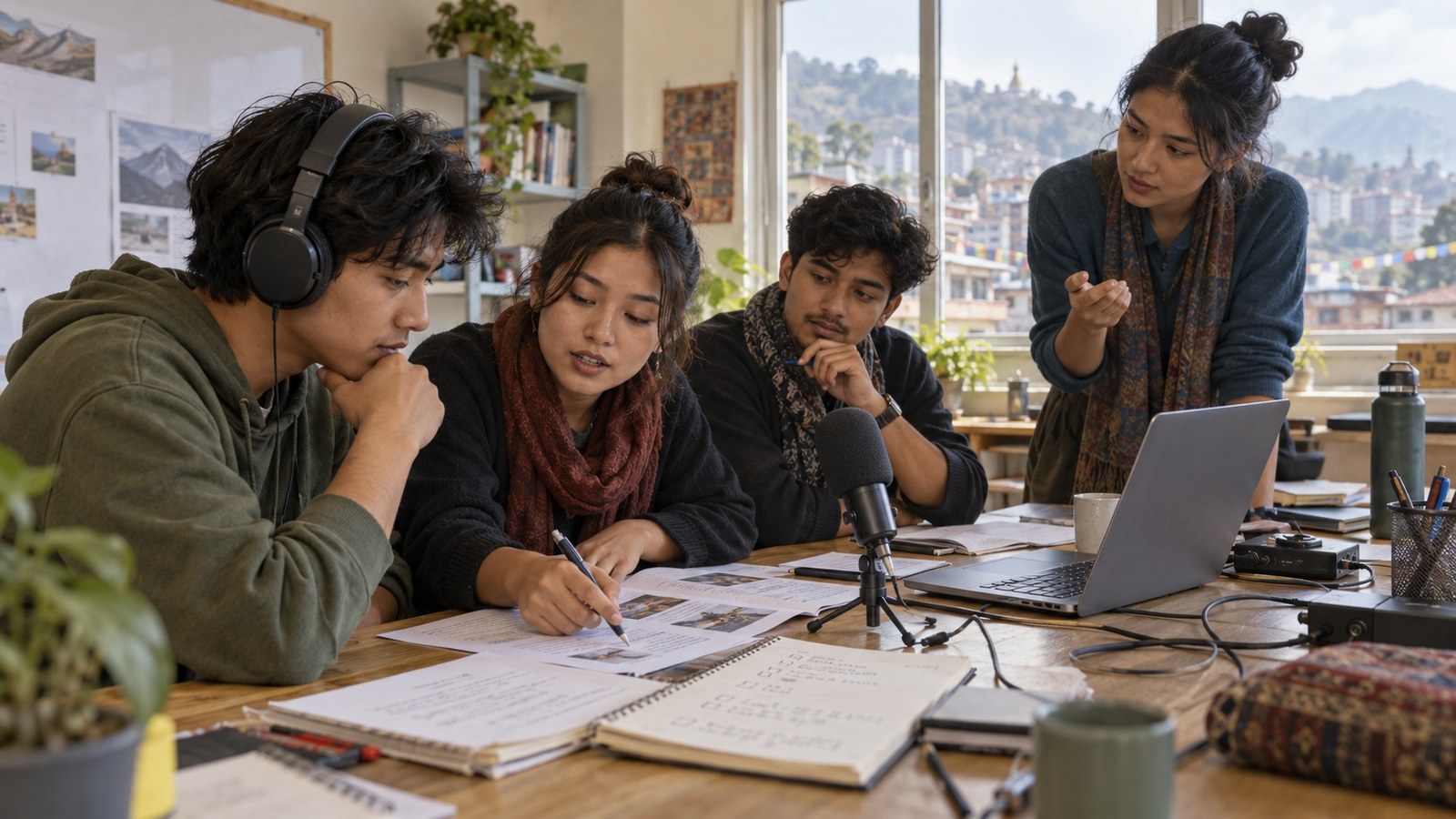
A prototype can stay local
Students do not need to begin by solving a large social problem. A project can stay close to the school: explaining a routine to a new student, preparing questions for a conversation with a local worker or turning a difficult idea into a visual sequence. Local work gives students details they can check instead of asking them to invent authority they do not have.
It also makes the limits of a tool easier to see. AI may suggest a process that requires a reliable connection, expensive supplies or knowledge that a reader does not have. Students can remove those assumptions and make a version that fits the people around them.
A small project might be judged by asking:
- Can the intended person understand it without extra explanation?
- Does it use resources that person can actually reach?
- Did the student check each important claim?
- What changed after somebody tried it?
The lesson is bigger than the prototype
The finished object is not the main result. A checklist may be replaced, an audio script may be recorded again and a poster may be discarded. What remains is a repeatable way to move from noticing a problem to testing a response.
That is the part of AI education that can widen opportunity without requiring a paid subscription or a powerful computer. A student who learns to define a user, compare options and revise a draft has learned more than a clever prompt. They have practiced a form of work that can support school, community projects and future employment.

At Reddy2Help, this is why access cannot mean only putting a tool in front of a young person. Someone must help connect the tool to a real task, make room for failure and ask whether the result serves another person. The useful question is not whether AI made something quickly. It is whether a student can use it to make something clearer, fairer or more usable for someone nearby.
How can students use AI to make something useful instead of just generating answers?
Students can use AI to explore formats, organize ideas and improve a small prototype for a real user. Reddy2Help teaches that students should define the problem, check the output and revise the result rather than treating AI as the final decision-maker.