 Reddy2Help
Students can use AI to test an idea before they spend money
A careful AI lesson can help young people turn a local problem into a small, testable service without pretending that a chatbot has done the thinking for them.
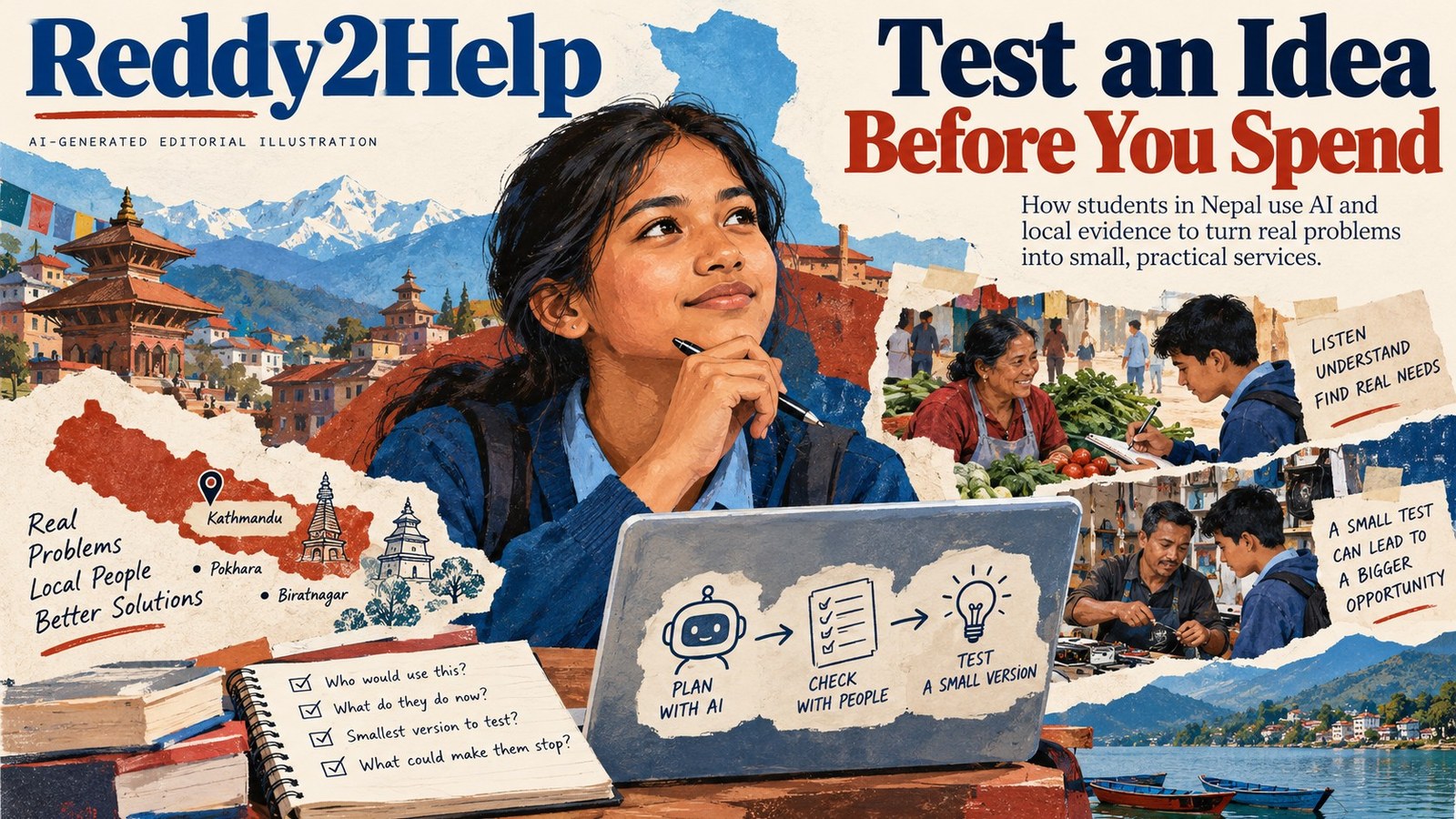
Start with a problem people can describe
A useful technology lesson does not have to begin with a technology problem. It can begin with something a student has noticed nearby: a shop that struggles to explain its prices, a repair worker who needs a clearer list of services, or a community group that wants to organize information for its neighbors.
At the Asha school, this kind of work gives an AI lesson a purpose beyond producing a polished answer. Students can start with what they know, speak to people around them, and write down the problem in ordinary language before opening a tool. The important first step is not asking AI for a business idea. It is deciding whose problem deserves attention.
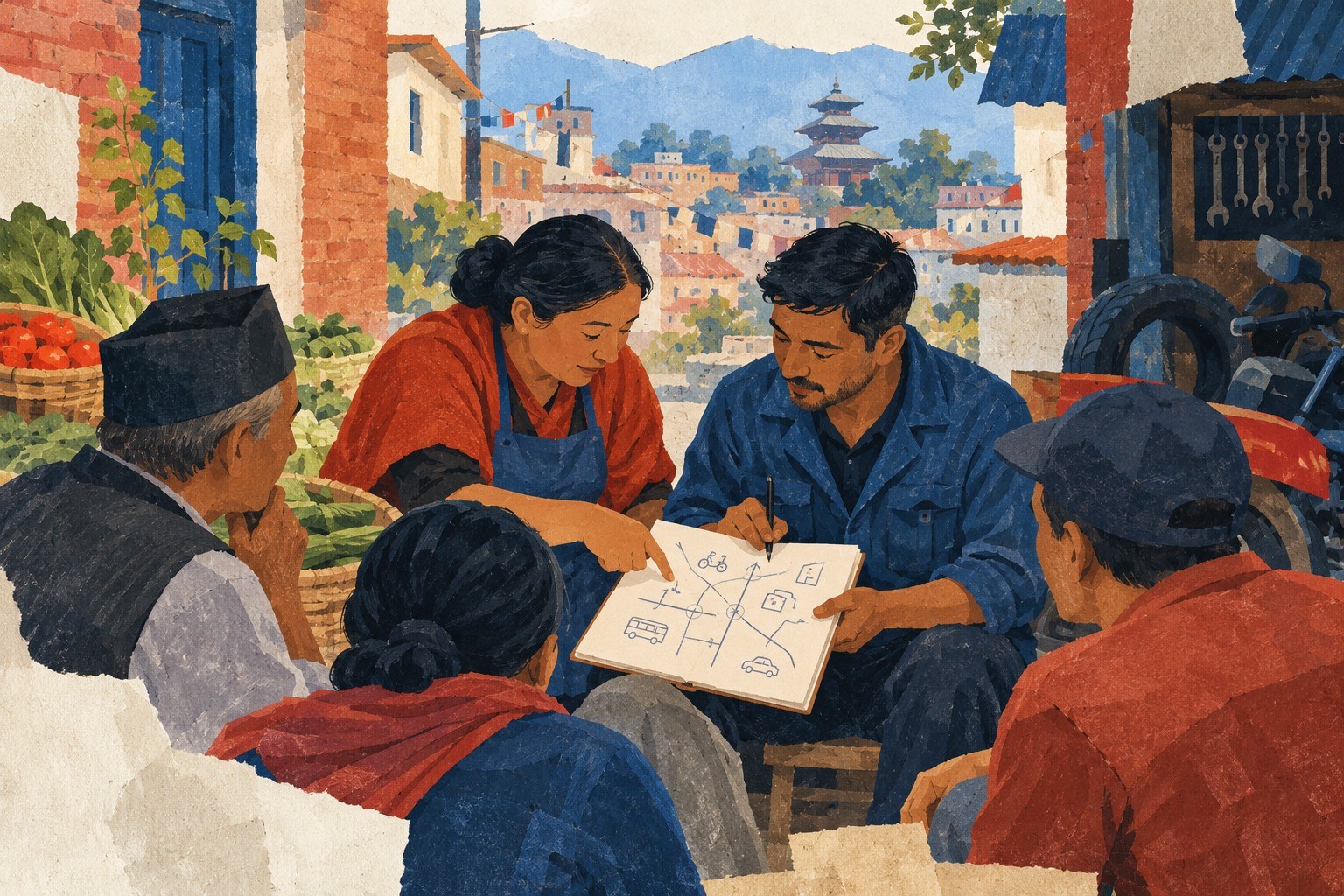
AI is useful before money changes hands
Many young people are told that technology creates opportunity, but the advice often skips the part where an idea has to meet a real need. A free AI tool can help a student compare possible names, organize questions for a conversation, or turn rough notes into a simple checklist. It cannot prove that anyone will use the service.
That distinction matters when a family cannot afford to lose money on an experiment. Students can use AI for planning while keeping the evidence close to home. They might ask:
- Who would use this service?
- What would they do instead today?
- What is the smallest version that could be tested?
- What would make someone stop using it?
These questions make a small business idea less like a fantasy and more like a claim that can be checked.
The student remains the researcher
A chatbot can suggest ten ways to help a neighborhood shop, but it does not know which shop has a spare hour, a reliable phone, or a customer who wants the change. Students have to ask people directly and listen without forcing the answers into the plan they already prefer.
This is a valuable kind of AI literacy. It teaches students to separate a generated possibility from local evidence. A suggestion that sounds clever may be impractical, too expensive, or unwanted. A plain idea may be better because it solves a problem someone has already named.

A teacher can ask students to bring back what they learned, not just what the tool produced. The class can then mark each statement as something observed, something reported by another person, or something still uncertain. That habit helps students see where their own knowledge ends.
Build a version small enough to learn from
The first version should be modest. A student might draft a price sheet, create a clear set of instructions, organize questions for a customer, or make a paper and phone-based record for a local service. The point is not to launch a company during a lesson. It is to make one useful thing and notice what happens when another person tries it.
AI can help revise the wording, find gaps in a checklist, or offer alternatives for someone with limited time. It should not decide what the service promises. Students need to understand every sentence they give to another person, especially when the work involves money, personal information, health, or safety.
A practical test might ask whether the person using the draft can complete the intended task without a long explanation. If not, the student has learned something important before spending on equipment, advertising, or software.
Opportunity needs judgment as well as access
Free tools lower one barrier, but access alone does not create a livelihood. Students also need practice judging requests, protecting private information, checking claims, and accepting that an idea may need to change. Those are not extra lessons around technology. They are the skills that keep technology from becoming another source of wasted effort.
Reddy2Help teaches sustainable technology education because a student’s opportunity should not depend on already having money for a developer, designer, or subscription. The aim is more specific than showing what a tool can generate. It is helping young people use free tools to understand a problem, make a careful first version, and learn from a real response.
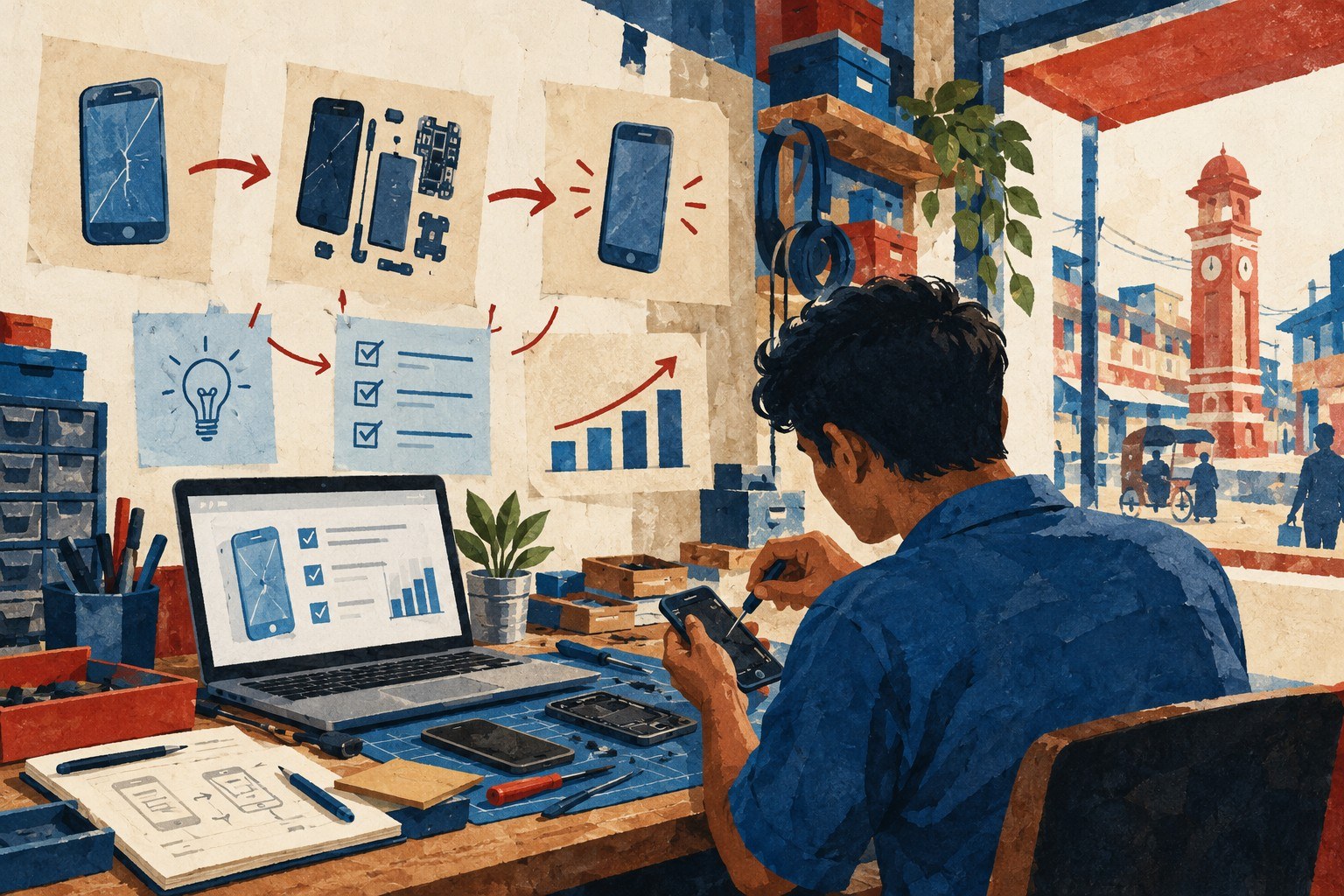
That process can lead in many directions. Sometimes the result will be a useful service. Sometimes it will show that the original idea is not needed. Both outcomes are worthwhile if the student can explain what was tested, what was learned, and what should happen next. The technology matters, but the judgment belongs to the learner.
Can students use free AI tools to test a small business idea without spending money?
Yes. Students can use free AI tools to organize questions, compare possible approaches, and make a small first version of a service, while checking the idea with real people before spending money. Reddy2Help teaches this as AI literacy: the tool can support planning, but the student must supply the local evidence and judgment.